Skip to content
The highest paying AI jobs in 2026 are not just for researchers at elite labs anymore. Four of LinkedIn’s top five fastest-growing job titles this year are AI-related. Job postings across AI and machine learning have surged 163% year over year, reaching over 49,000 open positions in the United States alone. Roles requiring AI skills now carry a 56% wage premium over comparable non-AI positions, up from just 25% one year ago. The market is repricing in real time, and professionals who act now will compound that advantage for years.
Whether you are a software engineer considering a pivot, a student mapping your career, or a professional looking to transition into tech, this guide breaks down every major AI role by salary, required skillset, and the certifications that actually matter to hiring managers. If you want to prepare seriously with mock interviews, a structured 90-day roadmap, or personal guidance from someone already working in the field, Everyone Who Codes has everything you need to get there faster.
Why 2026 is a different market?
The shift that defines this moment is the move from AI research to AI deployment. Two years ago, the highest paying AI jobs were concentrated in a handful of large tech companies building foundation models. Today, companies across healthcare, finance, manufacturing, and retail are hiring aggressively to run production AI systems. The demand curve is unlike anything the tech industry has seen before.
Global AI spending is projected to hit 301 billion dollars in 2026, up from 223 billion dollars last year. 94% of business leaders report facing AI-critical skill shortages. The global demand to supply ratio for AI talent sits at approximately 3.2 to 1, and for specialized roles it reaches as high as 8 to 1. Mid-level AI engineers saw 9.2% salary growth year over year, the steepest gain at any experience level in the entire tech industry. The window to position yourself in this market is open right now.
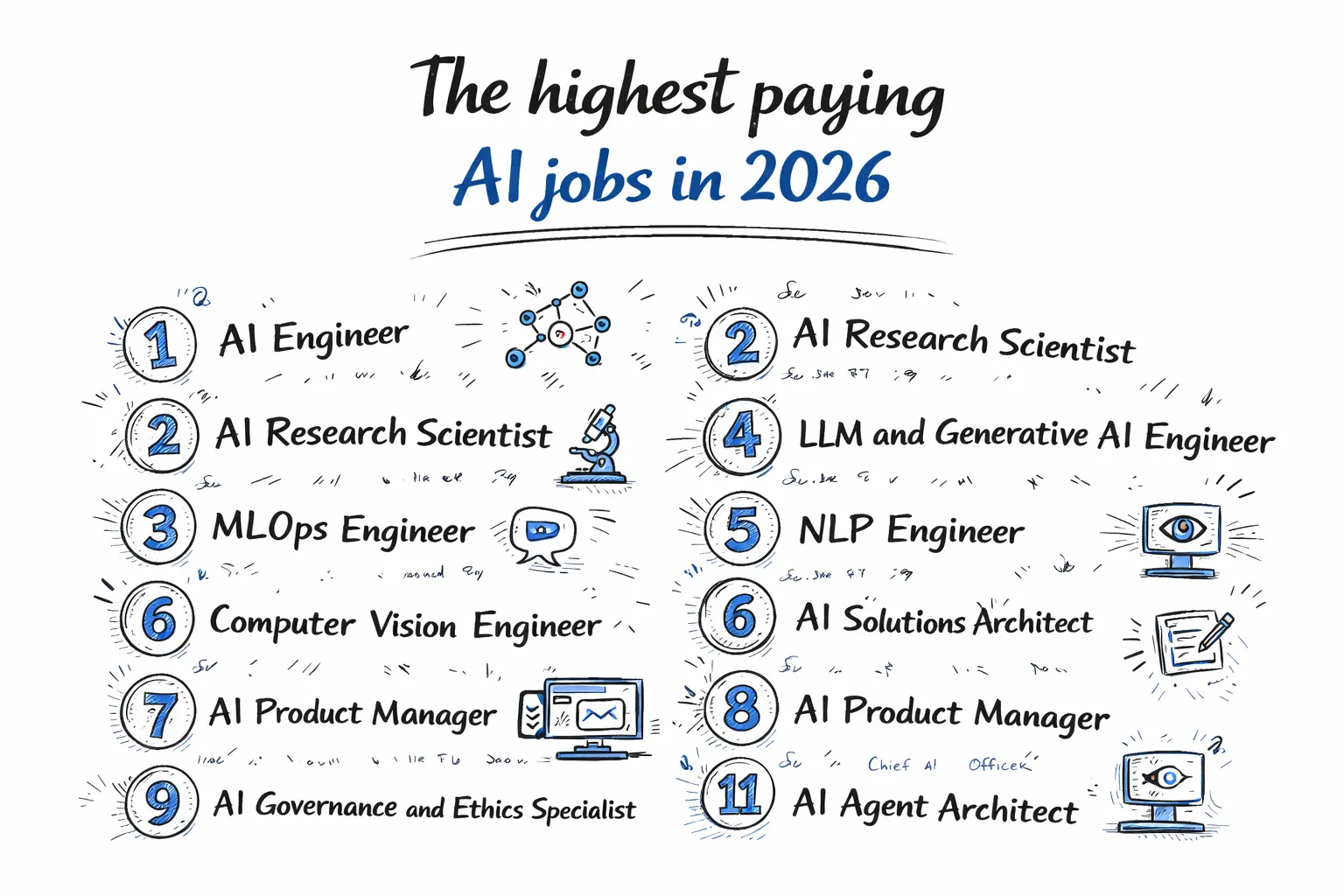
The highest paying AI jobs in 2026
1. AI Engineer
Salary range: $90,000 to $400,000 plus at entry to staff level | Year over year growth: 143%
LinkedIn ranked AI engineer the number one fastest-growing job title in the United States for 2026. This is the broadest and most in-demand title among the highest-paying AI jobs today. The role covers designing, building, and deploying AI systems in production environments and sits at the center of almost every industry’s hiring plans.
Skillset required:
LangChain and RAG (Retrieval-Augmented Generation) for building production AI pipelines, PyTorch and TensorFlow for model development and fine-tuning, API integration and cloud deployment across AWS, Azure, and Google Cloud, strong Python and software engineering foundations, and proficiency with vector databases and embeddings.
Certifications that help:
AWS Certified Machine Learning Specialty delivers approximately a 20% salary premium. Google Professional Machine Learning Engineer delivers approximately a 25% premium. DeepLearning.AI TensorFlow Developer Certificate is widely recognized by employers. Microsoft Certified Azure AI Engineer Associate is valuable for enterprise-focused roles.
Entry level base salary: $90,000 to $135,000
Mid level base salary: $140,000 to $210,000
Senior base salary: $180,000 to $280,000
Staff or Principal total compensation: $350,000 to $600,000 plus
2. AI Research Scientist
Salary range: $175,000 to $489,000 plus, with top labs exceeding $900,000 in total compensation
When measuring raw compensation alone, AI Research Scientists sit at the very top of the highest-paying AI jobs list. This role focuses on advancing the frontier of what AI systems can do, developing novel architectures, and publishing research that shapes the direction of the entire industry.
Skillset required:
Deep expertise in PyTorch and deep learning theory, knowledge of computer vision, NLP, and transformer architectures, strong foundations in statistical modeling and experimental design, advanced mathematics including linear algebra, calculus, and probability, and familiarity with reinforcement learning and multimodal systems.
Certifications and credentials:
A PhD adds $45,000 to $75,000 to base compensation in this specific role. Publications at NeurIPS, ICML, or ICLR are the most valued credentials in the research community. The Hugging Face NLP Course is widely respected for practical LLM research skills. Research internships at leading AI labs carry significant hiring signal.
Mid level base salary: $180,000 to $280,000
Senior base salary: $300,000 to $489,000 plus
Top total compensation: Can exceed $900,000 with equity
3. LLM and Generative AI Engineer
Salary range: $165,000 to $350,000 plus at mid to senior level
The explosion of large language model applications across every industry has created one of the highest paying AI jobs specializations of this generation. This role sits at the intersection of research and deployment, requiring both technical depth and the practical judgment to ship reliable systems that businesses can depend on.
Skillset required:
Fine-tuning and prompt engineering with GPT-4, Claude, Gemini, and open-source models, hands-on experience with LangChain, LlamaIndex, and agentic AI frameworks, RAG system design and vector database management using Pinecone, Weaviate, or Chroma, model evaluation and hallucination mitigation techniques, and cost optimization for inference at scale.
Certifications that help:
Deep learning AI LangChain for LLM Application Development is highly practical. The Hugging Face NLP Course is free and widely respected by hiring teams. AWS Bedrock and Google Vertex AI specializations signal cloud-specific deployment skills.
Mid level base salary: $165,000 to $230,000
Senior base salary: $240,000 to $350,000 plus
4. MLOps Engineer
Salary range: $145,000 to $280,000 plus
MLOps is the critical bottleneck between AI pilots and production deployment and has become one of the highest-paying AI jobs in the operational side of the field. Only 1% of US companies have successfully scaled AI beyond pilot phases, and the primary reason is the shortage of engineers who can manage model performance, retraining pipelines, and deployment infrastructure at scale.
Skillset required:
Docker, Kubernetes, and CI/CD pipeline management, ML model monitoring and drift detection and automated retraining, cloud ML platforms including AWS SageMaker, Google Vertex AI, and Azure ML, feature stores and experiment tracking using MLflow and Weights and Biases, and infrastructure as code using Terraform.
Certifications that help:
AWS Certified Machine Learning Specialty and Google Professional ML Engineer are the two most valued credentials. Certified Kubernetes Application Developer (CKAD) signals strong infrastructure skills. DataBricks Certified Associate Developer for Apache Spark is valuable for data-heavy ML pipelines.
Mid level base salary: $145,000 to $200,000
Senior base salary: $210,000 to $280,000 plus
5. NLP Engineer
Salary range: $135,000 to $209,000 plus from entry to senior level
NLP engineers build the systems that understand, generate, and process human language at scale. With the explosion of LLM-powered applications, NLP has reached the highest demand growth rate among all technical AI skill categories with a 155% increase in job postings. This role appears in nearly 20% of all AI job postings, making it one of the most consistently in demand highest paying AI jobs across industries.
Skillset required:
Transformer architectures, attention mechanisms, and tokenization, fine-tuning BERT, RoBERTa, and GPT variants for domain-specific tasks, named entity recognition, sentiment analysis, and question-answering systems, the Hugging Face Transformers library and datasets ecosystem, and latency optimization and production deployment of NLP models.
Certifications that help:
The Hugging Face NLP Course is the most respected credential in this space. Stanford CS224N materials are widely recognized by hiring teams even without a formal certificate.
Entry level base salary: $135,000
Mid level base salary: $162,000 to $170,000
Senior base salary: $209,000 plus
6. Computer Vision Engineer
Salary range: $140,000 to $310,000 plus
Computer vision engineers command the highest entry-level salaries of any AI specialization, making this one of the most immediately lucrative highest paying AI jobs for new graduates with the right technical background. Demand is driven by autonomous vehicles, manufacturing quality control, medical imaging, and retail analytics. The healthcare AI market alone is projected to reach $110 billion by 2030.
Skillset required:
Deep learning for image classification, object detection, and segmentation, OpenCV, PyTorch Vision, and TensorFlow Object Detection API, convolutional neural networks, YOLO architectures, and Vision Transformers, medical imaging experience which carries a significant premium in healthcare roles, and model optimization for edge deployment using ONNX and TensorRT.
Certifications that help:
DeepLearning.AI Computer Vision Specialization is a strong foundational credential. NVIDIA Deep Learning Institute certifications are highly valued for GPU-specific skills. Fast.ai Practical Deep Learning is widely respected by employers in this space.
Entry level base salary: $140,043
Mid level base salary: $150,000 to $215,000
Senior base salary: $220,000 to $310,000 plus
7. AI Solutions Architect
Salary range: $140,000 to $332,000 | Average Base: $209,000 for cloud AI architects
AI Solutions Architects sit at the intersection of technical AI capabilities and enterprise infrastructure. They design systems that integrate AI into existing cloud environments and translate complex technical decisions into business-ready architectures. This is one of the highest paying AI jobs for professionals who combine deep technical knowledge with the ability to communicate at the executive level.
Skillset required:
Cloud-native architecture design across AWS, Azure, or GCP, AI system design with a focus on scalability, latency, cost, and reliability tradeoffs, enterprise integration patterns and API design, security, compliance, and data governance for AI systems, and executive-level communication and stakeholder management.
Certifications that hold the most weight:
AWS Certified Solutions Architect Professional combined with AWS Certified Machine Learning Specialty delivers a 20 to 25% salary premium. Google Professional Cloud Architect paired with Professional ML Engineer is highly valued. Azure Solutions Architect Expert combined with Azure AI Engineer Associate covers the Microsoft ecosystem thoroughly.
8. AI Product Manager
Salary range: $157,000 to $284,000 in total compensation | Open Roles: Over 14,000 globally
AI Product Managers are responsible for products built on probabilistic systems, which means managing stakeholder expectations around non-deterministic outputs and designing product experiences that account for the possibility of incorrect AI outputs. McKinsey research found that generative AI improves PM productivity by nearly 40%, making strong AI PMs among the highest paying AI jobs professionals that are both rare and extremely valuable.
Skillset required:
AI and ML fluency including understanding of model capabilities and limitations, product strategy, roadmapping, and cross-functional leadership, user research and experience design for AI-powered features, data literacy and the ability to interpret model performance metrics, and stakeholder communication around AI risks and trade-offs.
Certifications and learning paths:
Product School AI Product Management Certificate is the most recognized credential for this role. The Reforge AI Product Management program is highly respected among senior practitioners. Google Project Management Professional Certificate builds strong foundational skills. DeepLearning AI for everyone is widely recommended for non-technical PMs building AI fluency.
9. AI Governance and Ethics Specialist
Salary range: $130,000 to $200,000 plus | Year over Year Growth: Approximately 45%
The EU AI Act compliance obligations go into effect in August 2026, and that single regulatory shift has created urgent demand across every regulated industry. About 60% of enterprises are expected to establish AI ethics boards by end of 2026. Bias-related AI incidents average $2.4 million per incident in legal fees and reputational damage, which gives organizations a concrete financial reason to treat this as one of the highest paying AI jobs worth investing in seriously.
Skillset required:
Deep understanding of the EU AI Act, GDPR, and US AI policy landscape, risk assessment frameworks for AI systems, technical understanding of bias detection, fairness metrics, and model auditing, legal and compliance background which adds significant compensation premium, and policy writing and executive stakeholder communication.
Certifications and training:
IAPP Certified Information Privacy Professional (CIPP/E) is the most recognized credential. IEEE Certified Ethically Aligned Designer is valued in technical governance roles. MIT Sloan Executive Education in AI Ethics and Governance carries strong signal for senior roles.
10. Prompt Engineer
Salary range: $100,000 to $300,000 plus | Year over Year Growth: 135.8%
Prompt engineering has gone from novelty to recognized discipline and sits among the most accessible of the highest paying AI jobs for professionals without a traditional computer science background. Structured prompting approaches can reduce AI hallucinations by 40% and improve brand alignment by 60% in enterprise deployments, making this role genuinely valuable rather than a transitional position.
Skillset required:
Deep familiarity with LLM behavior, context management, and output evaluation, chain-of-thought, few-shot, and system prompt design techniques, understanding of model-specific behavior across GPT-4, Claude, Gemini, and open-source models, analytical ability to evaluate and iterate on prompt performance at scale, and content strategy or copywriting background which is a genuine advantage.
certifications:
Learn Prompting is a free and industry-recognized credential. Anthropic Prompt Engineering documentation and courses are the most authoritative resource for Claude-specific work. DeepLearning.AI ChatGPT Prompt Engineering for Developers is practical and widely respected.
11. AI Agent Architect
Salary range: $150,000 to $280,000 plus
AI Agent Architect is one of the most important and rapidly emerging highest paying AI jobs of 2026. Gartner projects that 40% of enterprise applications will embed task-specific AI agents by year end, up from less than 5% in 2024. The talent pool for this role is extremely small because the skills required barely existed as a coherent discipline two years ago.
Skillset required:
Multi-agent orchestration frameworks including AutoGen, CrewAI, and LangGraph, tool-use design, function calling, and agent memory architectures, safety guardrail design and human-in-the-loop system design, workflow automation and enterprise process understanding, and strong software engineering foundations for reliable production deployment.
Certifications and learning:
LangChain Academy LangGraph courses are the most current and directly relevant resource. DeepLearning.AI Multi AI Agent Systems with crewAI is a widely recognized foundational course. AutoGen documentation and Microsoft AI courses cover the Microsoft ecosystem.
12. Chief AI Officer
Salary range: $180,000 to $500,000 plus base salary, with total packages significantly higher
One in four companies now has a Chief AI Officer, and 66% expect most companies to hire one within two years. The Chief AI Officer oversees AI strategy, governance, ethics, and deployment across the entire organization. This role sits at the very top of the highest paying AI jobs in corporate leadership, with total packages exceeding one million dollars at large enterprises when equity is included.
Skillset required:
10 to 15 plus years in AI and technology leadership, enterprise AI strategy and organizational transformation experience, deep understanding of AI governance frameworks and emerging global regulation, board-level communication and budget ownership across business units, and a demonstrated track record of scaling AI systems in production.
Credentials that matter most:
Executive education in AI strategy from MIT, Stanford, or Wharton carries strong signal. Prior VP or Director of AI and ML Engineering experience is typically required. Published thought leadership or conference speaking in AI builds credibility for executive recruiting.
The skills commanding the steepest premiums
Not all AI skills are equal in the hiring market. The specific skills that carry the highest salary premiums in 2026 are machine learning at a 40% wage premium, TensorFlow at a 38% premium, deep learning at a 27% premium, and PyTorch which appears in 37.7% of all AI job postings. LangChain, RAG systems, and vector databases are the most common skills found in the fastest-growing highest paying AI jobs on LinkedIn right now.
The freelance market reflects the same priorities. AI video generation and editing grew 329% on Upwork year over year. AI integration skills grew 178%. These are not research trends. They are where businesses are actively spending money and where the highest paying AI jobs are being created at the fastest rate.
Free resources, mock interviews, and mentorship
Getting into the highest paying AI jobs in 2026 requires preparation that reflects how the market has actually changed. Employers are no longer testing for algorithm memorization. They are evaluating how well you work with AI tools to solve real problems, how you think through system design, and whether you can demonstrate production-level thinking.
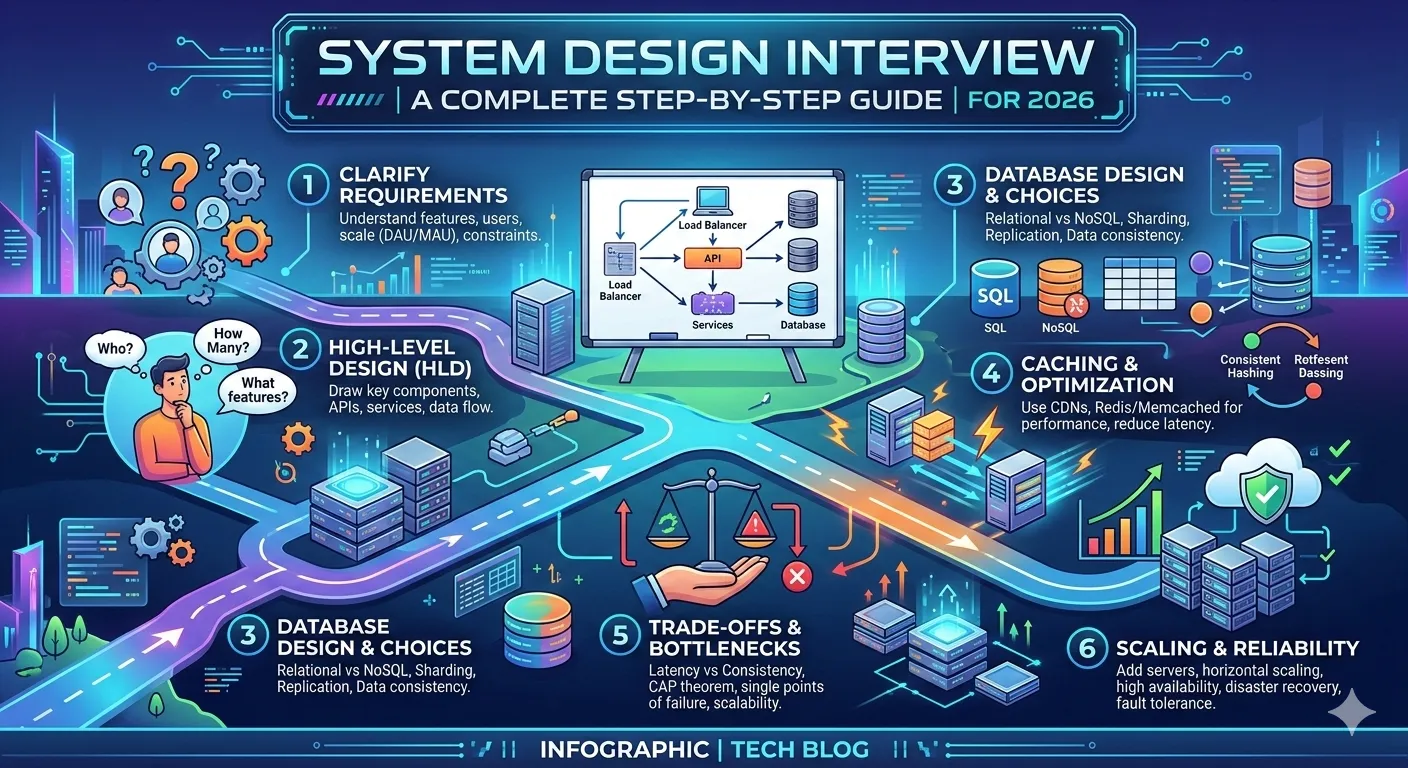
Everyone Who Codes offers free resources specifically built for this landscape, including FAANG-level interview preparation, system design guides, and resume resources that reflect what hiring managers are actually looking for right now. The free material at everyonewhocode.com/free-faang-interview-preparation is more current than most paid courses and gives you a clear picture of exactly where you stand before you start applying.
For structured personalized support, the 1:1 tech mentorship program at everyonewhocode.com/services/1-1-tech-mentorship connects you with engineers who are actively working in AI roles. They will review your projects, sharpen your interview skills, and help you map a realistic 90-day path to your target role. The difference between candidates who spend six months applying and those who land in 90 days is almost never raw skill. It is focused preparation with someone who knows the field from the inside.
The certification ROI question
Certifications are worth the investment with one important condition. A certification without a portfolio of deployed projects carries little weight with most hiring managers for the highest paying AI jobs. A certification combined with production experience is a strong hiring signal.
The highest ROI certifications for 2026 are AWS Certified Machine Learning Specialty with approximately a 20% salary premium, Google Professional ML Engineer with approximately a 25% premium, and AWS AI Practitioner which is a strong entry signal for career changers. Google and AWS ML certifications appeared in 40% more job postings than certifications from competing providers, and demand for these credentials grew 21% year over year. If your target employer ecosystem runs on AWS, invest in AWS certifications. If it runs on Google Cloud, invest in Google certifications. The platform match matters more than the certification name itself.
How to break into the highest paying AI jobs
The data is clear on the single most important strategic decision: specialization beats generalization. Domain experts who combine AI skills with deep industry knowledge in healthcare, finance, or manufacturing command salaries 30 to 50% higher than generalists at equivalent experience levels. The highest paying AI jobs in 2026 are not going to professionals with the broadest AI knowledge. They are going to professionals with the deepest intersection of AI skills and domain expertise.
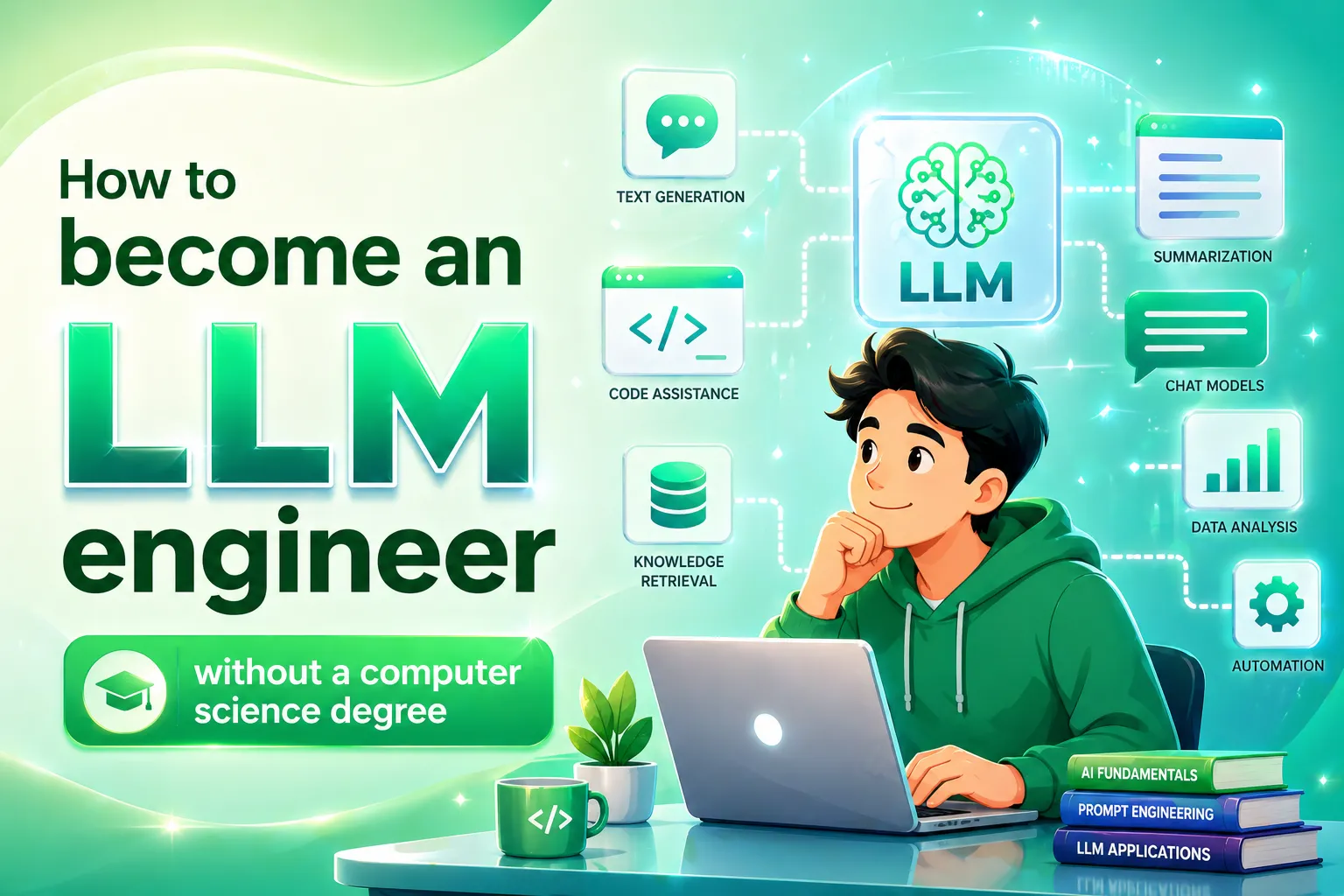
For those early in their careers, the most accessible entry points into high-paying AI work are Prompt Engineering which requires no traditional CS background, AI Data Annotation which builds foundational ML intuition, and AI Content Creation which combines existing creative skills with AI tooling. All three are among the fastest-growing roles, and all three offer viable pathways to more senior positions over time.
For mid-career professionals pivoting from software engineering, the fastest ROI comes from building production AI experience rather than just completing courses, earning one cloud-specific ML certification, and targeting mid-level roles where the 9.2% year-over-year salary growth is sharpest.
Final thoughts
The highest paying AI jobs in 2026 are not a hype cycle. They are a structural transformation of how work gets done, and every data point points toward sustained growth in these roles for years to come. Global AI spending will reach 301 billion dollars this year. The agentic AI market alone is projected to grow from 7.6 billion dollars today to 236 billion dollars by 2034.
The professionals who establish themselves now by picking a specialization, building production experience, and preparing seriously will have compounding advantages over those who wait.
Start by checking where your resume stands against what AI hiring managers expect in 2026. Get a free resume review through Everyone Who Codes at everyonewhocode.com and see exactly what needs to change. From there, whether you need mock interviews, a structured learning plan, or a mentor who can give you direct feedback on your portfolio, Everyone Who Codes is built to help you land the role, not just learn the theory. The market is hiring. The salaries are real. The only question is how prepared you are when the right opportunity arrives.

Frequently asked questions
Highest Paying AI Jobs in 2026
Q1. What is the highest-paying AI job in 2026?
AI Research Scientists command the highest base salaries among all AI roles in 2026, with mid-level compensation ranging from $180,000 to $280,000 and senior-level reaching $300,000 to $489,000 plus. At top labs like OpenAI, Anthropic, and Google DeepMind, total compensation including equity can exceed $900,000. However, Chief AI Officers earn the broadest compensation packages overall, with base salaries reaching $500,000 plus and total packages exceeding one million dollars at large enterprises.
Q2. Do I need a computer science degree to get one of the highest paying AI jobs?
Not for every role. Prompt Engineering is one of the fastest-growing highest paying AI jobs and does not require a traditional computer science background. AI Governance and Ethics Specialists often come from legal, policy, or compliance backgrounds. AI Content Creators and AI Product Managers also have accessible entry paths for non-CS graduates. For roles like AI Research Scientist or MLOps Engineer, a technical degree or demonstrated equivalent experience through a project portfolio is expected by most hiring managers.
Q3. How much do entry-level AI engineers earn in 2026?
Entry-level AI Engineers in 2026 earn a base salary between $90,000 and $135,000, with total compensation reaching $110,000 to $160,000 when bonuses and equity are included. Computer Vision Engineers have the highest entry-level salary of any AI specialization at $140,043. NLP Engineers also start higher than most at $135,000 at the junior level. Entry-level salaries vary significantly by location, with San Francisco and New York paying 20 to 30% more than the national average for the same role.
Q4. Which AI certification gives the best salary increase in 2026?
Google Professional Machine Learning Engineer delivers approximately a 25% salary premium and is the highest ROI certification for most AI roles in 2026. AWS Certified Machine Learning Specialty delivers approximately a 20% premium and appears in 40% more job postings than certifications from competing providers. Both Google and AWS ML certifications saw demand grow 21% year over year. The key condition is that certifications deliver the best ROI when combined with a portfolio of deployed projects. A certification alone without production experience carries little weight with most hiring managers.
Q5. Is AI Engineer the most in-demand job right now?
Yes. LinkedIn ranked AI Engineer as the number one fastest-growing job title in the United States for 2026, with job postings rising 143% year over year. Four of LinkedIn’s top five fastest-growing roles are AI-related, and AI and ML job postings across the broader market surged 163% year over year, reaching over 49,000 open positions in the US alone. The demand to supply ratio for AI talent overall sits at approximately 3.2 to 1, meaning there are more than three open roles for every qualified candidate.
Q6. What skills are required for the highest paying AI jobs in 2026?
The skills commanding the highest premiums in 2026 are LangChain, RAG (Retrieval-Augmented Generation), vector databases, and multi-agent orchestration frameworks, which are the core skills of the agentic AI wave. At the framework level, PyTorch appears in 37.7% of all AI job postings and carries a significant hiring signal. Machine learning skills carry a 40% wage premium, TensorFlow expertise adds 38%, and deep learning skills add 27%. NLP capabilities saw a 155% increase in job postings year over year, making it the fastest-growing technical skill category in the entire AI hiring market.
Q7. Can I get into AI without prior tech experience?
Yes, though the path depends on the role you are targeting. The three most accessible entry points into the highest paying AI jobs without prior tech experience are Prompt Engineering, AI Data Annotation, and AI Content Creation. Prompt Engineering in particular does not require coding knowledge and has seen demand grow 135.8% year over year, with compensation ranging from $100,000 at entry level to $300,000 plus for senior roles at frontier AI labs. AI Governance and Ethics is another accessible path for professionals with legal, compliance, or policy backgrounds who want to move into the AI field.
Q8. How long does it take to land one of the highest paying AI jobs?
With focused preparation, mid-career software engineers are transitioning into AI roles within 90 days. The professionals who move fastest are those who target a specific specialization rather than trying to learn all of AI broadly, build at least one production-grade AI project they can show in interviews, and pair that experience with one relevant cloud certification. Career changers with no prior tech background typically take six to twelve months to reach entry-level AI roles, depending on the specific path they choose. Mentorship and structured preparation significantly compress that timeline compared to self-study alone.
Q9. What is the salary of a Chief AI Officer in 2026?
Chief AI Officers earn base salaries ranging from $180,000 to $500,000 plus at large enterprises, with total compensation packages that can exceed one million dollars when equity and performance bonuses are included. One in four companies now has a Chief AI Officer, and 66% of organizations expect most companies to hire one within two years. The role requires 10 to 15 years of AI and technology leadership experience, and the most valued credential is a demonstrated track record of scaling AI systems in production with measurable business ROI.
Q10. Is MLOps a good career choice in 2026?
MLOps is one of the strongest career choices in the entire AI field right now. The MLOps market is projected to grow to $39 billion by 2034, and only 1% of US companies have successfully scaled AI beyond pilot phases, meaning the demand for engineers who can operationalize AI is acute and growing. Mid-level MLOps Engineers earn $145,000 to $200,000 and senior-level engineers earn $210,000 to $280,000 plus. The role also benefits from strong job security because deployed AI systems require ongoing maintenance, monitoring, and retraining, which creates stable long-term demand rather than project-based hiring.
Q11. What is the difference between an AI Engineer and a Machine Learning Engineer?
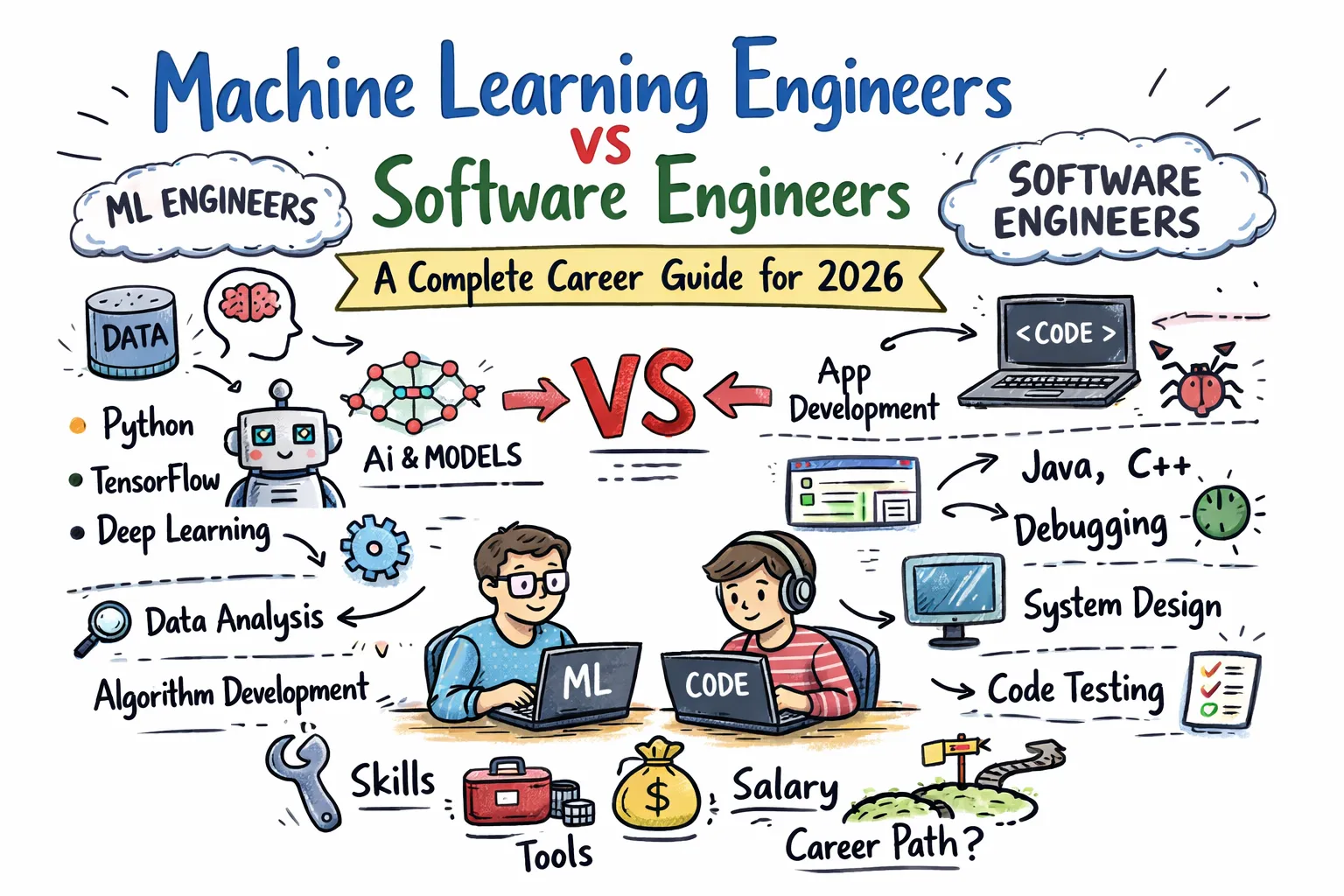
Machine Learning Engineers traditionally focused on building and training models using frameworks like PyTorch and TensorFlow. AI Engineers in 2026 have a broader mandate that includes deploying, integrating, and maintaining AI systems in production environments, working with LLMs and agentic frameworks like LangChain, and building RAG pipelines and vector database infrastructure. The ML Engineer role represents 45% of all AI job titles and is the most established position in the field, while AI Engineer is the fastest-growing title and reflects the industry’s shift from model training to AI deployment and application development.
Q12. Which industries are hiring the most for AI jobs in 2026?
Healthcare is the single largest creator of AI jobs in 2026, generating more than 640,000 positions linked to automated diagnostics, predictive analytics, and virtual patient support. Manufacturing follows closely with approximately 620,000 AI positions driven by quality control automation and predictive maintenance. Financial services added approximately 470,000 AI roles primarily in fraud detection, algorithmic trading, and risk assessment. What makes this significant is that these are not traditionally tech industries. The highest-value AI professionals in 2026 are increasingly those who combine AI engineering skills with deep domain knowledge in one of these sectors, which commands a 30 to 50% salary premium over generalist AI talent.
Q13. Is Prompt Engineering a real career or just a temporary trend?
Prompt Engineering is a real and growing career. Demand surged 135.8% in recent quarters with a projected compound annual growth rate of 32.8% through 2030. Companies have discovered that the difference between mediocre and excellent AI output often comes down entirely to prompt design, and structured prompting approaches can reduce hallucinations by 40% and improve brand alignment by 60% in enterprise deployments. Compensation ranges from $100,000 at entry level to $200,000 plus for senior roles, with positions at frontier AI labs exceeding $300,000. The role is also one of the most accessible among the highest paying AI jobs because it does not require a traditional computer science background.
Q14. What does an AI Agent Architect do and how much do they earn?
An AI Agent Architect designs and builds multi-agent AI systems where autonomous AI workers coordinate across business functions. This includes designing agent orchestration using frameworks like AutoGen, CrewAI, and LangGraph, building tool-use and function-calling architectures, implementing safety guardrails, and designing human-in-the-loop workflows. Gartner projects that 40% of enterprise applications will embed AI agents by end of 2026, up from less than 5% in 2024. Compensation ranges from $150,000 to $280,000 plus, and the talent pool is extremely small because the skills required barely existed as a coherent discipline two years ago, making this one of the most supply-constrained highest paying AI jobs in the entire market.
Q15. How can Everyone Who Codes help me land a high-paying AI job?
Everyone Who Codes provides a complete preparation ecosystem specifically built for the 2026 AI hiring market.
The free resources at everyonewhocode.com/free-faang-interview-preparation include FAANG-level interview preparation, system design guides, and resume resources that reflect what AI hiring managers are actually evaluating today.
For personalized support, the 1:1 tech mentorship program at everyonewhocode.com/services/1-1-tech-mentorship connects you directly with engineers who are actively working in AI roles. They review your projects, run mock interviews, and help you build a realistic 90-day plan to your target role. You can also get a free resume review at everyonewhocode.com to see exactly where you stand before you start applying.
For more information on AI careers, free interview preparation resources, and 1:1 mentorship, visit everyonewhocode.com