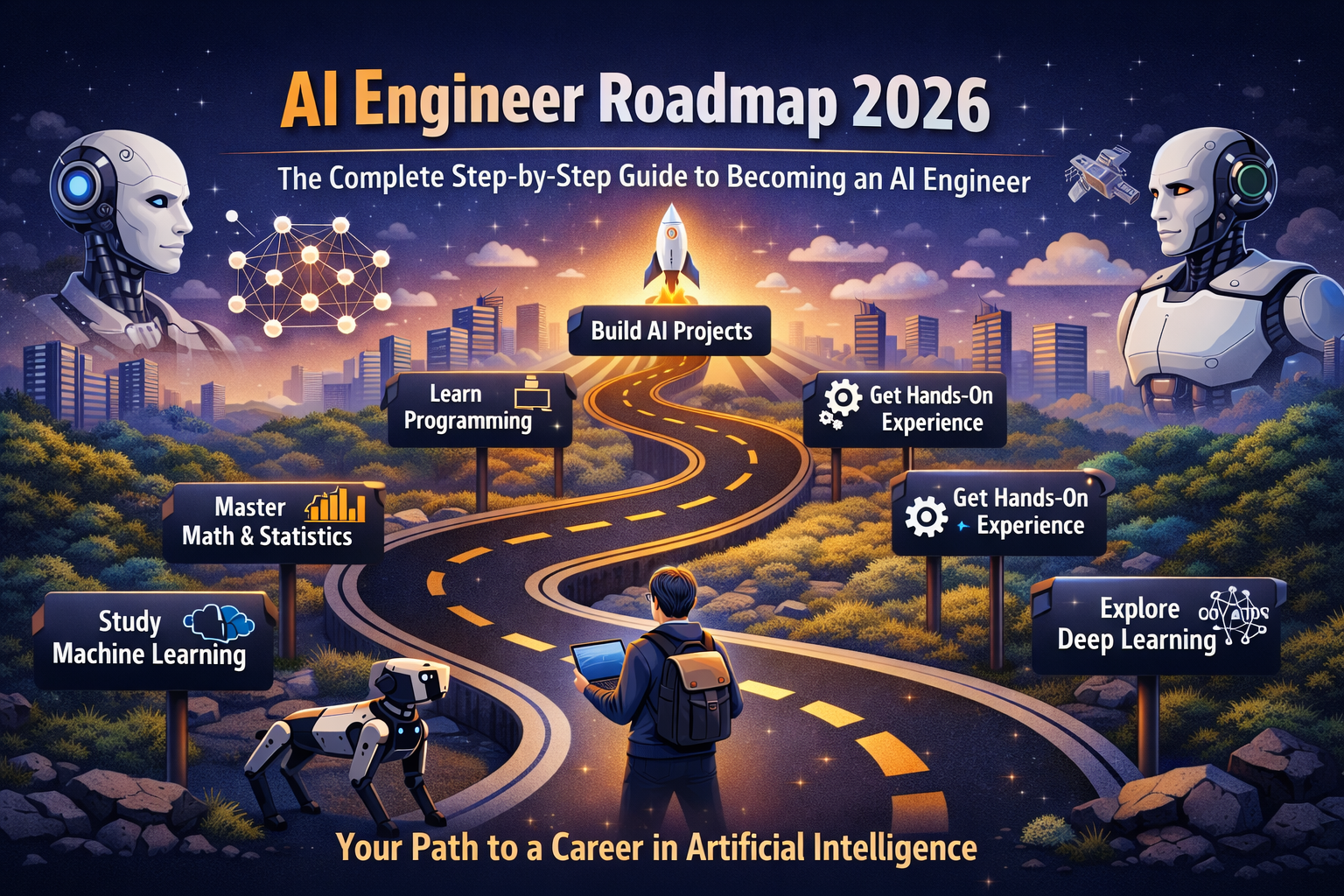
Artificial Intelligence is one of the most exciting fields in technology today. Every day we see new AI tools, smarter chatbots, recommendation systems, self-driving technologies, and automation transforming industries. Because of this growth, many aspiring developers want to become AI engineers. They start learning machine learning, neural networks, Python libraries, and frameworks like TensorFlow or PyTorch.
However, many beginners miss a very important foundation: Data Structures and Algorithms (DSA).
DSA might sound like something that only software engineers need for coding interviews, but in reality it plays a huge role in building efficient AI systems. Understanding how data is stored, processed, and optimized helps AI engineers create systems that work faster, scale better, and solve real-world problems effectively.
In this guide, we will explore why DSA is important for AI engineers, how it helps in real AI systems, and how learning it can help you land a job faster.
Before we dive deeper, it is important to understand that building a successful AI career requires more than just technical knowledge. Many developers struggle not because they lack skills, but because they lack the right strategy for interviews, resumes, and job preparation. Programs like Career Guidance Program, Land Interviews, Resume review & job search tips, Everyone Who Codes are designed to help developers prepare for the entire hiring process. Through resume review, interview preparation, and job search guidance, the program helps candidates build a structured plan to get a job in tech within 90 days. They also provide useful free resources that developers can explore while preparing for interviews and improving their technical skills.
If you are serious about preparing DSA the right way, you should explore https://everyonewhocode.com/. https://everyonewhocode.com/services/mastering-data-structures-algorithms/
🔗 Career Guidance Program – Land Interviews – Resume review & job search tips – Everyone Who Codes
🔗 1:1 DSA/ System Design/ Behavioural Interview Mentorship – 1 : 1 Tech Mentorship – Everyone Who Codes
🔗 1:1 Mock Interviews – DSA/ System Design / Behavioral Interview – Mock Interviews – Everyone Who Codes
Understanding DSA in simple terms
Let’s simplify what DSA actually means.
Data structures are ways of organizing and storing data so that it can be accessed and used efficiently. Examples include arrays, trees, graphs, stacks, queues, and hash tables.
Algorithms, on the other hand, are step-by-step procedures used to solve problems or process data.
When you combine these two ideas, you get a powerful toolkit that allows engineers to write programs that run faster and use fewer resources.
In artificial intelligence, data is at the center of everything. AI models learn patterns from huge datasets. These datasets can contain millions or even billions of data points. Without efficient ways to organize and process this data, AI systems can become extremely slow and difficult to manage.
This is where DSA becomes essential. It allows engineers to process large amounts of information efficiently and build systems that can scale to millions of users.
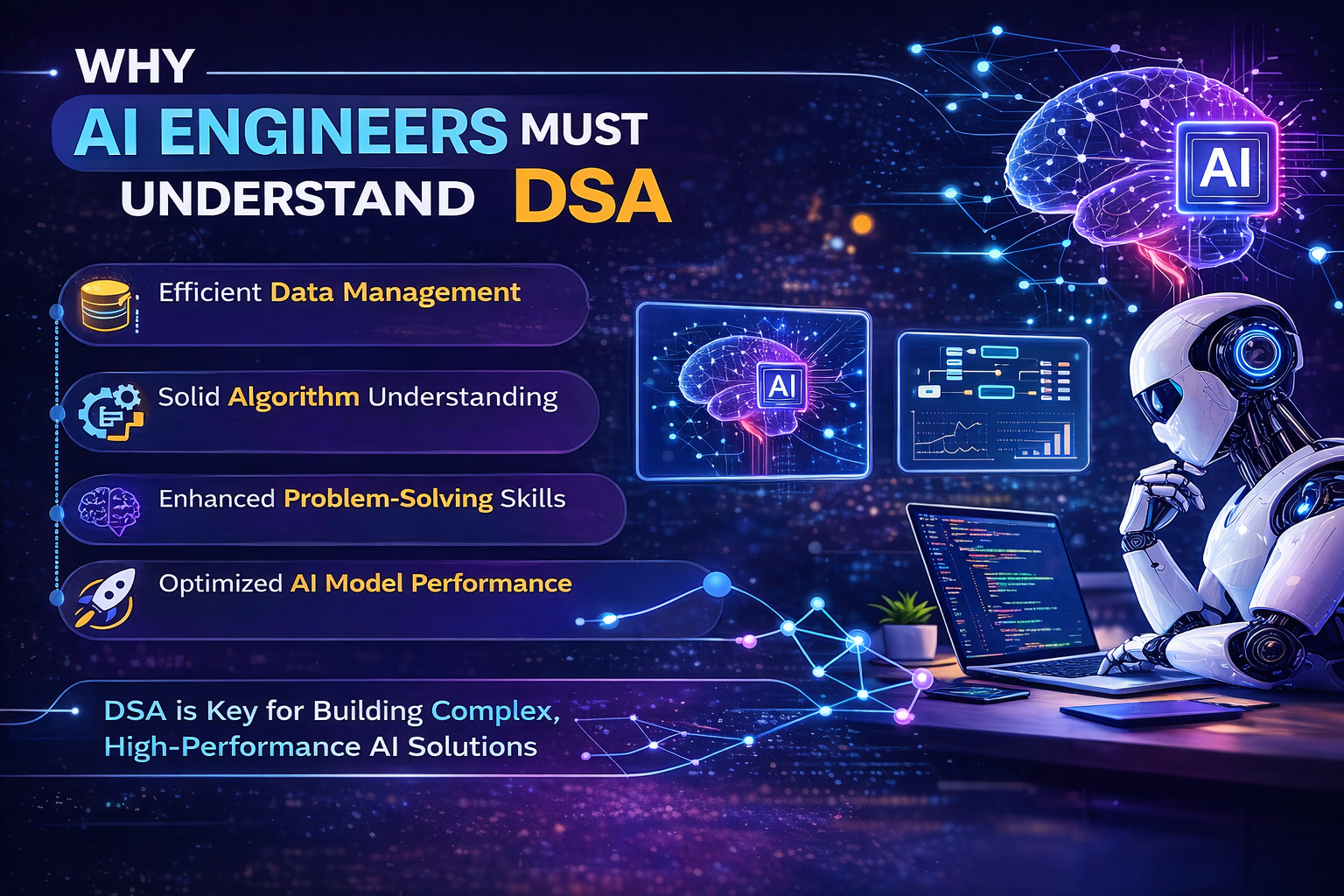
Why AI engineers must understand DSA
Many people believe that AI engineering is mostly about training machine learning models. While model development is important, real-world AI systems involve many additional components.
Before a model can even be trained, engineers must collect, clean, and process massive datasets. These datasets must be stored and accessed efficiently. Once the model is ready, it must be deployed into systems that can serve predictions quickly and reliably.
Imagine a recommendation system used by a streaming platform. When a user opens the app, the system must instantly analyze their preferences and suggest relevant content. Behind the scenes, complex algorithms process large amounts of data in real time.
Without efficient data structures and algorithms, this process would be slow and inefficient. Users would experience delays, and the system would struggle to scale.
This is why strong DSA knowledge helps AI engineers design systems that are fast, reliable, and scalable.
DSA plays a big role in technical interviews
Another reason AI engineers should learn DSA is the interview process. Most technology companies evaluate candidates through coding interviews, even for machine learning or AI roles.
These interviews usually test a candidate’s ability to solve algorithmic problems. Interviewers want to see how you think, how you break down problems, and how efficiently you can implement solutions.
Candidates may be asked to work with arrays, trees, graphs, or dynamic programming problems. These questions help interviewers evaluate logical thinking and problem-solving ability.
Unfortunately, many developers struggle at this stage because they have focused only on machine learning concepts and not on core computer science fundamentals.
Practicing DSA regularly helps engineers build the confidence needed to solve these problems during interviews. One of the most effective ways to improve interview performance is by participating in mock interviews that simulate real interview scenarios.
How DSA improves problem-solving skills
Learning DSA does more than just prepare you for interviews. It also improves the way you think about problems.
When engineers practice algorithmic problems, they learn to analyze situations carefully before writing code. They learn to identify patterns, evaluate multiple approaches, and choose the most efficient solution.
This kind of thinking is extremely valuable in artificial intelligence projects. AI engineers often deal with complex data pipelines, optimization challenges, and large-scale systems. Being able to analyze these challenges logically helps engineers build better solutions.
For example, graph algorithms are often used in recommendation systems, social networks, and route optimization. Tree structures are used in decision trees and hierarchical data processing. Hash tables allow fast data retrieval in real-time applications.
By understanding these concepts, AI engineers gain the ability to design smarter systems and solve technical challenges more effectively.
If you are serious about preparing DSA the right way, you should explore https://everyonewhocode.com/. https://everyonewhocode.com/services/mastering-data-structures-algorithms/
🔗 Career Guidance Program – Land Interviews – Resume review & job search tips – Everyone Who Codes
🔗 1:1 DSA/ System Design/ Behavioural Interview Mentorship to land job offers – 1 : 1 Tech Mentorship – Everyone Who Codes
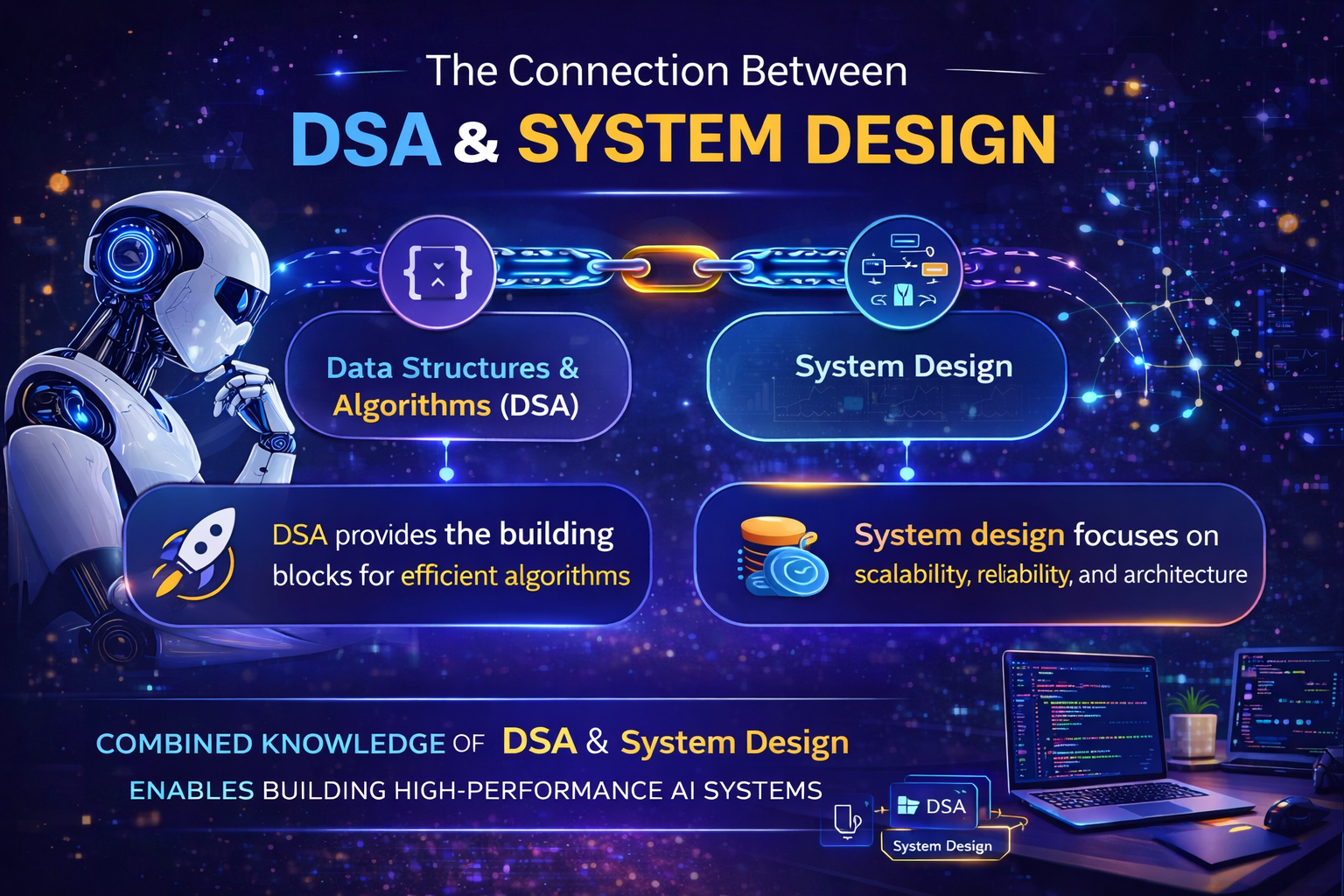
DSA provides the algorithmic foundation, while system design focuses on scalability and architecture—together enabling high-performance AI systems.
The connection between DSA and system design
As AI engineers gain more experience, their responsibilities usually expand beyond writing code. They may need to design entire systems that support AI applications.
For example, engineers may be asked to design systems for recommendation engines, chatbots, search platforms, or fraud detection tools. These systems must handle large volumes of data while delivering results quickly.
System design requires knowledge of scalability, performance optimization, and efficient data handling. Many of these concepts are closely connected to data structures and algorithms.
Understanding how graphs represent relationships, how caching works, or how indexing improves search performance helps engineers design systems that can handle millions of users.
The importance of a strong resume
Even if you have strong technical skills, landing interviews can still be difficult if your resume is not properly structured. Many companies use Applicant Tracking Systems (ATS) to filter resumes before recruiters even see them.
If your resume does not match the keywords or structure expected by these systems, it may never reach the hiring manager.
Creating an ATS-compliant resume increases the chances of getting shortlisted. It highlights your skills, projects, and experience in a way that recruiters can easily evaluate.
Many developers benefit from professional resume reviews that help them optimize their resumes for both ATS systems and recruiters. Through structured career guidance programs, developers can also receive advice on job search strategies, interview preparation, and career planning.
A simple roadmap to land an AI job in 90 days
Many developers feel overwhelmed when preparing for AI roles. However, with the right strategy and consistent effort, it is possible to make significant progress in a few months.
The first stage should focus on building a strong foundation in data structures and algorithms. Understanding the basics of arrays, hash maps, trees, and graphs helps engineers solve many common interview problems.
The next stage should involve practicing more advanced problems and learning system design concepts. This helps engineers understand how real-world systems are built and optimized.
Finally, the last stage should focus on interview preparation. Participating in mock interviews, refining communication skills, and improving resumes can greatly increase the chances of success.
Many developers accelerate this process by working with mentors who can guide them through the preparation journey. Through 1:1 DSA/ System Design/ Behavioural Interview Mentorship – 1 : 1 Tech Mentorship – Everyone Who Codes, candidates can book a session with experienced engineers who help them identify skill gaps, improve problem-solving abilities, and build a strong job search strategy.
Final thoughts
Artificial Intelligence is transforming industries and creating incredible opportunities for developers. However, building a successful AI career requires more than just learning machine learning frameworks.
Data Structures and Algorithms provide the strong foundation that every AI engineer needs. They help engineers write efficient code, design scalable systems, and perform well in technical interviews.
By investing time in mastering DSA, aspiring AI engineers can significantly improve their technical abilities and career prospects.
If you want to accelerate your preparation, practicing interviews is extremely valuable. You can explore Real Mock Interviews with Expert FAANG Engineers – Mock Interviews – Everyone Who Codes to gain real interview experience and receive feedback from experienced engineers.
Everyone Who Codes also provides mentorship programs, mock interviews, resume guidance, and free learning resources designed to help developers grow their careers and get a job in tech within 90 days.
If you are serious about becoming an AI engineer, start strengthening your DSA foundation today and take the next step toward your AI career.
https://everyonewhocode.com/services/mastering-data-structures-algorithms/
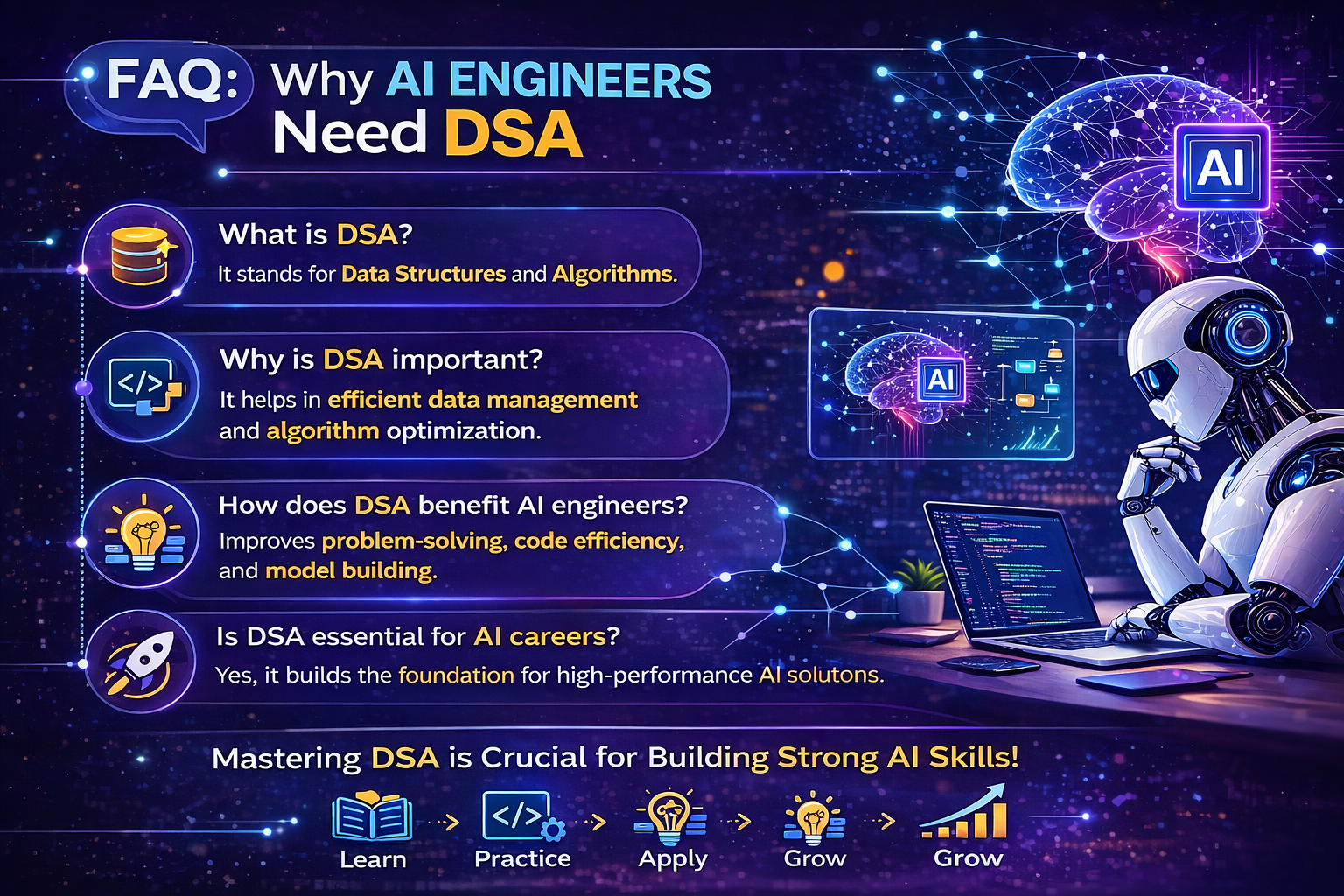
FAQ: Why AI Engineers Need DSA
Why is DSA important for AI engineers?
Data Structures and Algorithms (DSA) help AI engineers build efficient and scalable systems. AI applications often process huge datasets, and efficient data structures like trees, graphs, and hash tables help organize and retrieve data quickly. Algorithms ensure that operations such as searching, sorting, and optimization are performed efficiently.
Do AI engineers really need DSA if they focus on machine learning?
Yes. While machine learning focuses on building models, real-world AI systems involve data pipelines, large-scale processing, and system optimization. DSA helps engineers manage data efficiently and ensures that AI systems perform well in production environments.
How does DSA help in AI technical interviews?
Most tech companies test candidates with coding interviews that focus on algorithmic problem solving. Even for AI or machine learning roles, candidates are often asked questions related to arrays, graphs, trees, and dynamic programming. Strong DSA skills help candidates solve these problems confidently.
Which data structures are most useful for AI engineers?
Some commonly used data structures in AI include:
- Arrays and Lists – for storing datasets
- Hash Tables – for fast data lookup
- Trees – used in decision trees and hierarchical data
- Graphs – useful in recommendation systems and social networks
- Queues and Stacks – used in search algorithms and data processing
How does DSA improve problem-solving skills?
Practicing DSA teaches engineers how to break down complex problems into smaller steps. It helps them evaluate multiple approaches, analyze time and space complexity, and choose the most efficient solution. These skills are extremely valuable when designing AI systems or optimizing data pipelines.
What is the connection between DSA and system design in AI?
System design involves building scalable systems that handle large amounts of data and users. DSA concepts such as graph structures, indexing, caching, and search algorithms help engineers design efficient AI systems like recommendation engines, chatbots, and search platforms.
How long does it take to learn enough DSA for AI job preparation?
With consistent practice, many developers can build a solid DSA foundation in 2–3 months. This typically involves learning core concepts like arrays, hash maps, trees, graphs, and dynamic programming while solving coding problems regularly.
What is the best way to practice DSA for AI roles?
The best approach includes:
- Learning fundamental DSA concepts
- Solving coding problems regularly
- Practicing interview-style questions
- Participating in mock interviews
- Applying DSA concepts to real-world projects
Combining structured learning with consistent practice significantly improves both problem-solving skills and interview performance.
Want a Personalized Plan to land interviews and clear them to land job offers?
If you want a structured roadmap, real feedback, and mentorship from FAANG engineers, here is how we can help:
- Career Guidance Program (to get interview calls) – Resume review & job search tips – Everyone Who Codes
• 1:1 DSA / System Design / Interview Mentorship to clear interviews – 1 : 1 Tech Mentorship – Everyone Who Codes - Real Mock Interviews with Expert FAANG Engineers – Mock Interviews – Everyone Who Codes
If you are serious about preparing DSA the right way, you should explore https://everyonewhocode.com/. https://everyonewhocode.com/services/mastering-data-structures-algorithms/