Skip to content
The system design interview has become one of the most critical rounds in technical hiring in 2026. Whether you are targeting FAANG companies, product startups, or remote US-based roles, your performance in the system design interview often determines your level, compensation band, and long-term career growth. Unlike coding interviews that focus on algorithms and syntax, a system design interview evaluates how you think about scalability, reliability, distributed systems, and architectural trade-offs.
Many engineers struggle with the system design interview because they approach it without structure. They jump into drawing diagrams before understanding requirements. They mention technologies without explaining why. They forget to discuss scale. This guide will walk you through a practical and structured way to approach any system design interview with clarity and confidence.
If you are serious about preparing the right way, you should explore https://everyonewhocode.com/. Mastering System Design for Interviews | EveryoneWhoCode
Everyone Who Codes provides a structured roadmap, real interview-focused preparation, and mentorship specifically designed to help engineers master coding and system design interviews. Instead of random preparation, you get focused guidance that aligns with actual hiring expectations. If your goal is to get a job in 90 days, joining Everyone Who Codes can significantly accelerate your progress.
Why system design interview matters in 2026
In 2026, companies are looking for engineers who can design systems that serve millions of users reliably. A system design interview evaluates whether you understand distributed systems, database design, caching, load balancing, and performance optimization. Even engineers with two to three years of experience now face system design interview rounds because companies want problem solvers, not just coders.
A strong system design interview performance shows that you can think like a technical leader. Interviewers assess how you structure your thoughts, how you communicate trade-offs, and whether you understand real-world constraints. If you can clearly explain why, you introduced replication, how you would scale horizontally, or how you would reduce latency under heavy load, you immediately stand out in a system design interview.
Step 1 : Understanding and clarifying requirements
The first and most important phase of any system design interview is requirement clarification. Many candidates fail because they start designing before fully understanding the problem. A system design interview is collaborative, and you are expected to ask thoughtful questions.
Start by clarifying functional requirements. What features must the system support? Who are the users? What are the core use cases? Then move to non-functional requirements such as expected traffic, latency requirements, and availability expectations. Clarifying scope early prevents major design mistakes later.
For example, designing a globally distributed architecture when the interviewer expects a regional solution can waste time and create unnecessary complexity. A strong start makes the rest of the system design interview structured and logical.
If you are tired of random prep and want a structured plan tailored to your experience, we offer 1:1 career mapping, DSA mentorship, and FAANG-style mock interviews at Everyone Who Codes to land job offers in under 90 days
Link here:
🔗 Career Guidance Program – Land Interviews – Resume review & job search tips – Everyone Who Codes
🔗 1:1 DSA/ System Design/ Behavioural Interview Mentorship – 1 : 1 Tech Mentorship – Everyone Who Codes
🔗 1:1 Mock Interviews – DSA/ System Design / Behavioral Interview – Mock Interviews – Everyone Who Codes
Step 2 : Estimating scale and traffic patterns
Scale estimation is a defining moment in a system design interview. You do not need perfect numbers. You need realistic approximations that guide architecture decisions. Estimate daily active users, read-to-write ratios, peak requests per second, and storage growth per year.
If your system expects millions of read requests per second, you will need caching and possibly read replicas. If write volume is high, partitioning and sharding become essential. These early decisions influence every layer of your design.
The goal of scale estimation in a system design interview is to show that you understand how load impacts architecture. Even rough calculations demonstrate practical engineering maturity.
Step 3 : Designing clean APIs and data models
Before drawing infrastructure diagrams, define APIs and core data entities. In a system design interview, APIs represent the contract between clients and backend services. Clear API definitions demonstrate clarity of thought.
Next, move to the data model. Identify entities, relationships, and access patterns. Decide whether a relational database or NoSQL solution makes more sense based on scale and query behavior. Discuss indexing, partitioning strategies, and consistency models.
Your data model shapes the system’s scalability and performance. In a system design interview, explaining why you made certain database choices is far more important than naming a specific technology.
Step 4 : Creating the high-level architecture
After requirements and data modeling, design the high-level architecture. Start simple. Introduce a load balancer distributing traffic to multiple application servers. Add a database layer. Include caching if the system is read-heavy. Add object storage or a CDN if media handling is required.
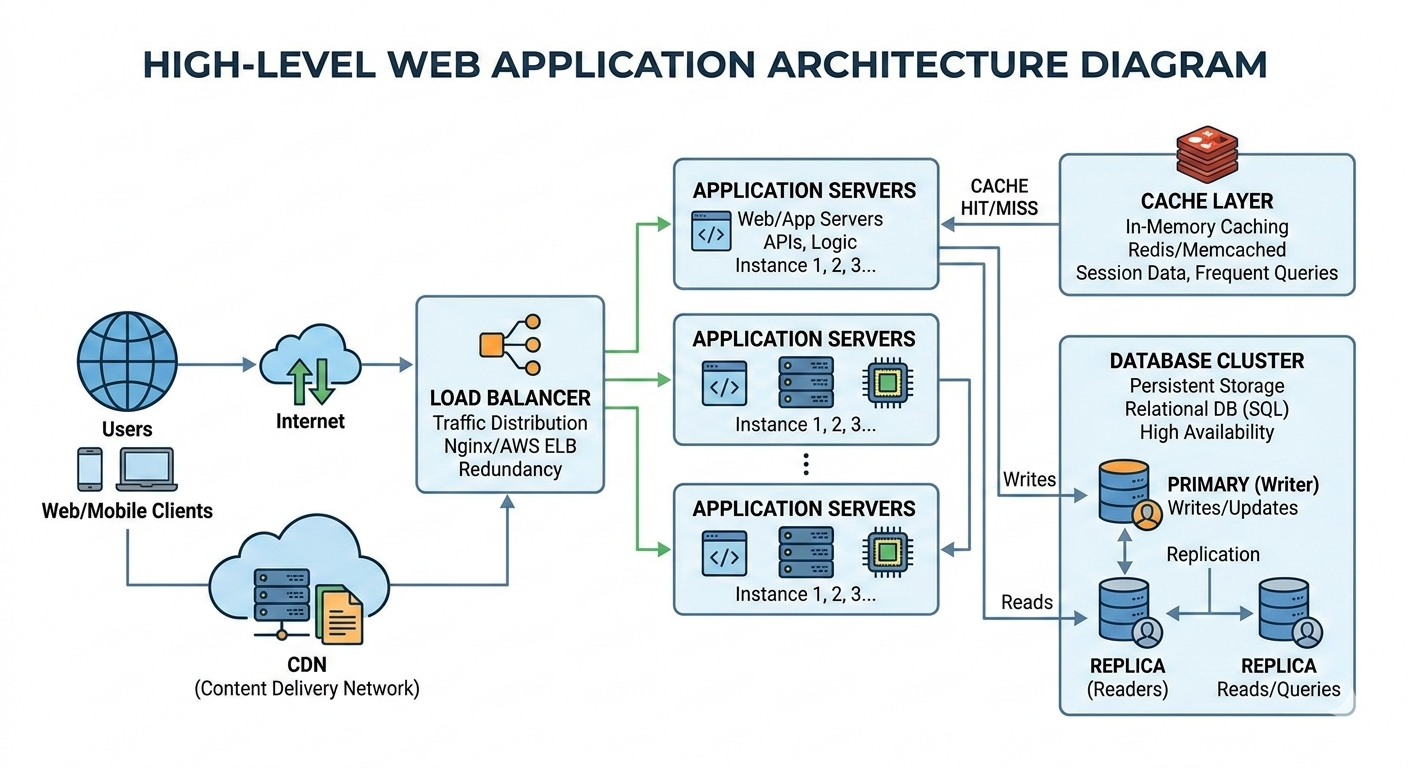
This visual helps the interviewer see your overall thinking. In a system design interview, simplicity first is always better. You can introduce complexity gradually based on discussion.
Step 5 : Exploring deep technical trade-offs
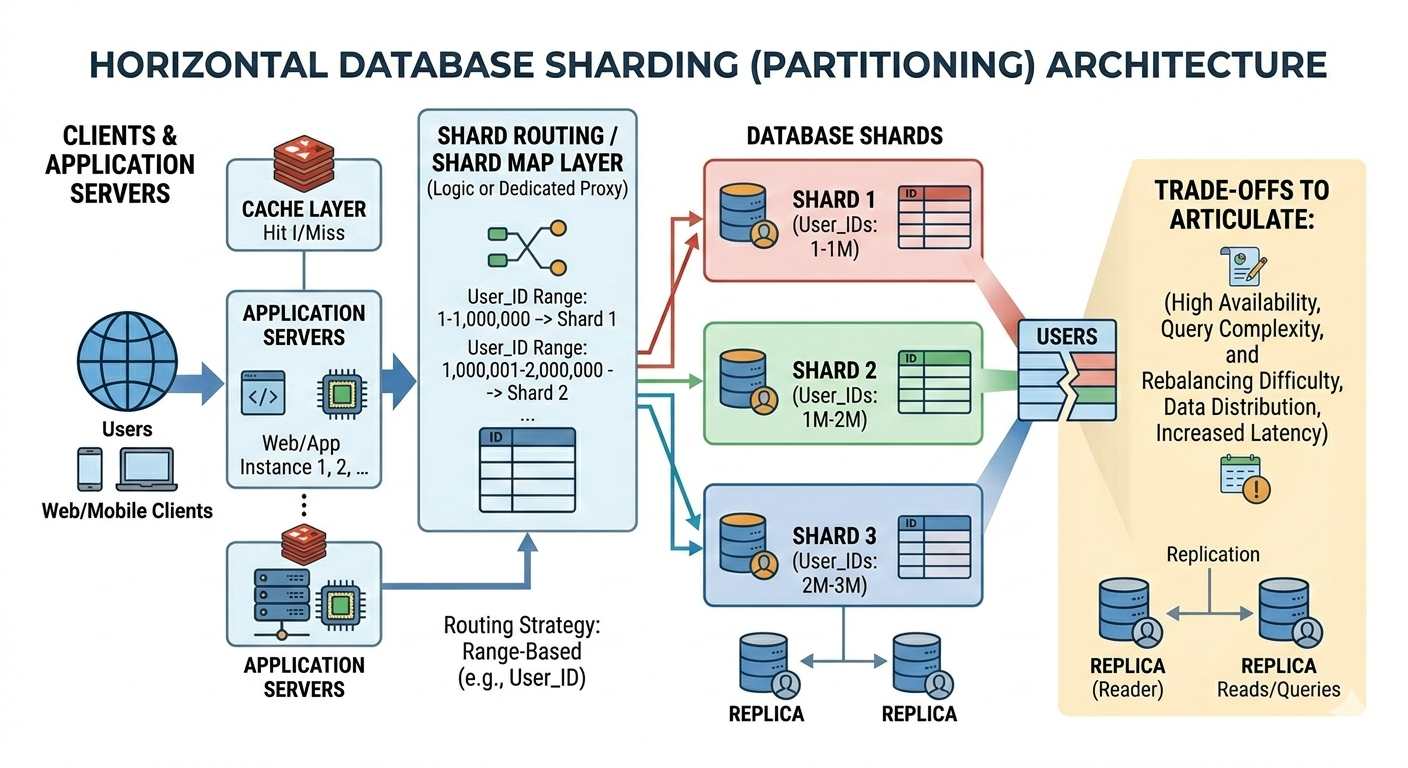
Once the high-level design is clear, the interviewer may ask you to go deeper. This is where your system design interview performance truly stands out. You might discuss database sharding strategies, caching policies, replication mechanisms, and load balancing algorithms.
For example, sharding by user ID distributes traffic effectively but can create hot partitions if certain users generate heavy activity. Write-through caching ensures consistency but increases write latency. Every decision involves trade-offs.
Step 6 : Identifying bottlenecks and failure scenarios
An impressive system design interview answer always addresses potential bottlenecks. Discuss single points of failure, database overload risks, cache invalidation challenges, and network congestion.
Then explain how to mitigate these issues through replication, failover mechanisms, auto-scaling groups, and monitoring systems. Thinking about failure scenarios shows that you understand real-world distributed systems.
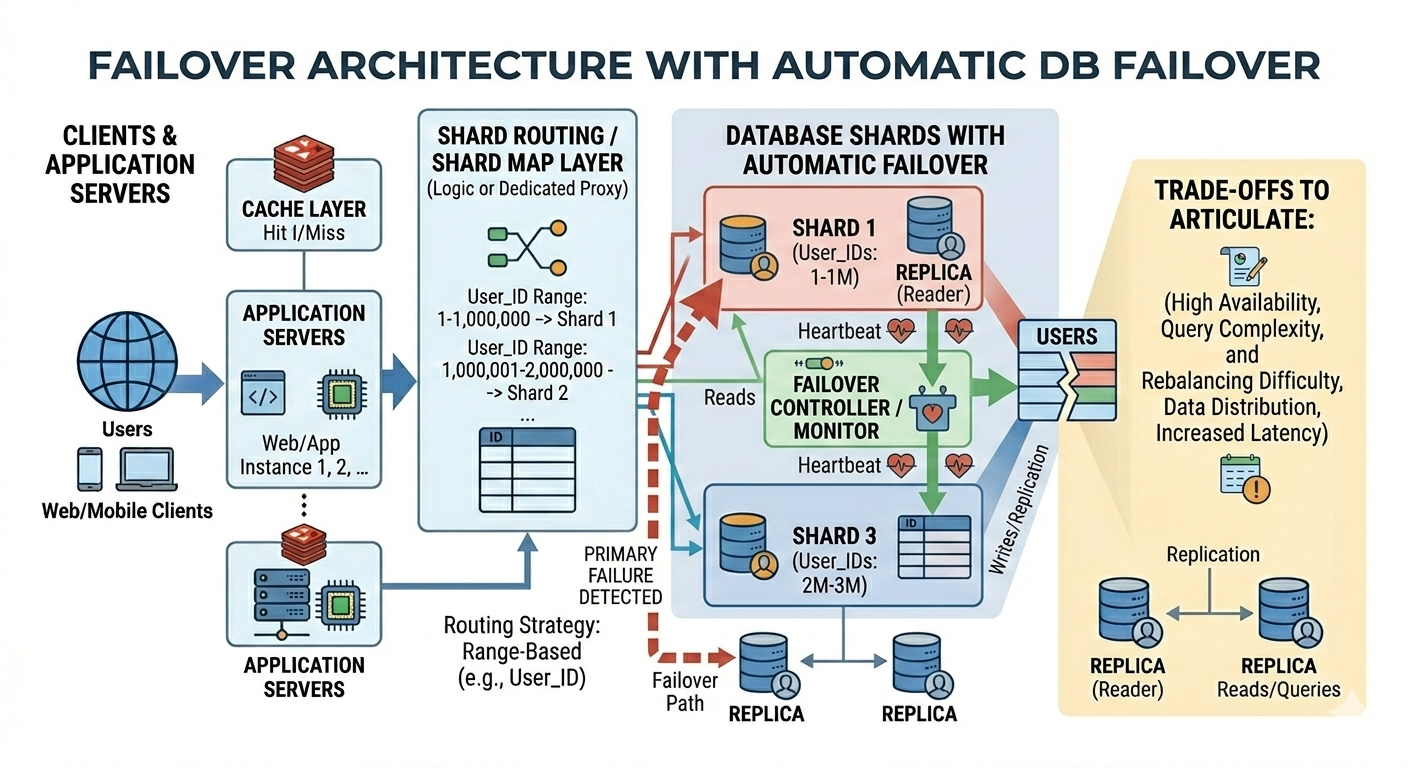
Proactively discussing reliability adds significant strength to your system design interview answer.
Step 7 : Practicing with mock system design interview sessions
Preparation without practice is incomplete. The best way to improve your system design interview skills is through realistic mock interviews. Practicing under time pressure helps you refine structure, pacing, and clarity of communication.
You can book structured mock interviews here: https://everyonewhocode.com/services/mock-interviews/. These mock sessions simulate real hiring scenarios and provide actionable feedback that directly improves your system design interview performance.
If you prefer personalized career guidance along with technical preparation, you can also book a 1:1 mentorship session here: https://everyonewhocode.com/services/1-1-tech-mentorship/. One-on-one feedback can dramatically improve how you approach and communicate in a system design interview.
How to get a job in 90 days
If you want to get a job in 90 days, you need a disciplined and structured approach. In the first month, focus on core fundamentals such as databases, caching, load balancing, distributed systems basics, and scalability patterns. In the second month, practice at least fifteen to twenty full system design interview problems. In the third month, take mock interviews and begin applying strategically.
You can strengthen your preparation by regularly reading structured content here: https://everyonewhocode.com/blogs/. Additionally, explore free FAANG interview preparation resources here: https://everyonewhocode.com/free-faang-interview-preparation/.
Consistency, feedback, and structured preparation significantly increase your success rate in a system design interview.
Get free resume ATS compliant
Before reaching a system design interview, your resume must pass applicant tracking systems. An ATS compliant resume increases interview callbacks. At Everyone Who Codes, you can receive guidance on creating a free ATS compliant resume aligned with current hiring standards.
To learn more about the mission and background behind the platform, visit https://everyonewhocode.com/about-us/. A strong resume ensures that your preparation for the system design interview converts into real opportunities.
Why you should join Everyone Who Codes
Preparing for a system design interview alone can feel overwhelming. There is too much scattered information and no clear roadmap. Everyone Who Codes offers structured preparation paths, real mock interviews, mentorship, resume support, and free learning resources in one place.
Instead of guessing what to study next, you follow a clear strategy. Instead of practicing alone, you receive targeted feedback. If your goal is to crack your next system design interview and secure a better role in 2026, structured preparation makes a measurable difference.
You can start your journey here to master system design: Master System Design.
Final thoughts
The system design interview is about structured thinking, logical trade-offs, and clear communication. If you clarify requirements, estimate scale, define APIs, design clean architecture, explore technical trade-offs, and address bottlenecks, you will perform confidently in any system design interview.
With consistent practice, strategic preparation, mock interviews, and the right mentorship, you can crack your system design interview and get a job in 90 days.
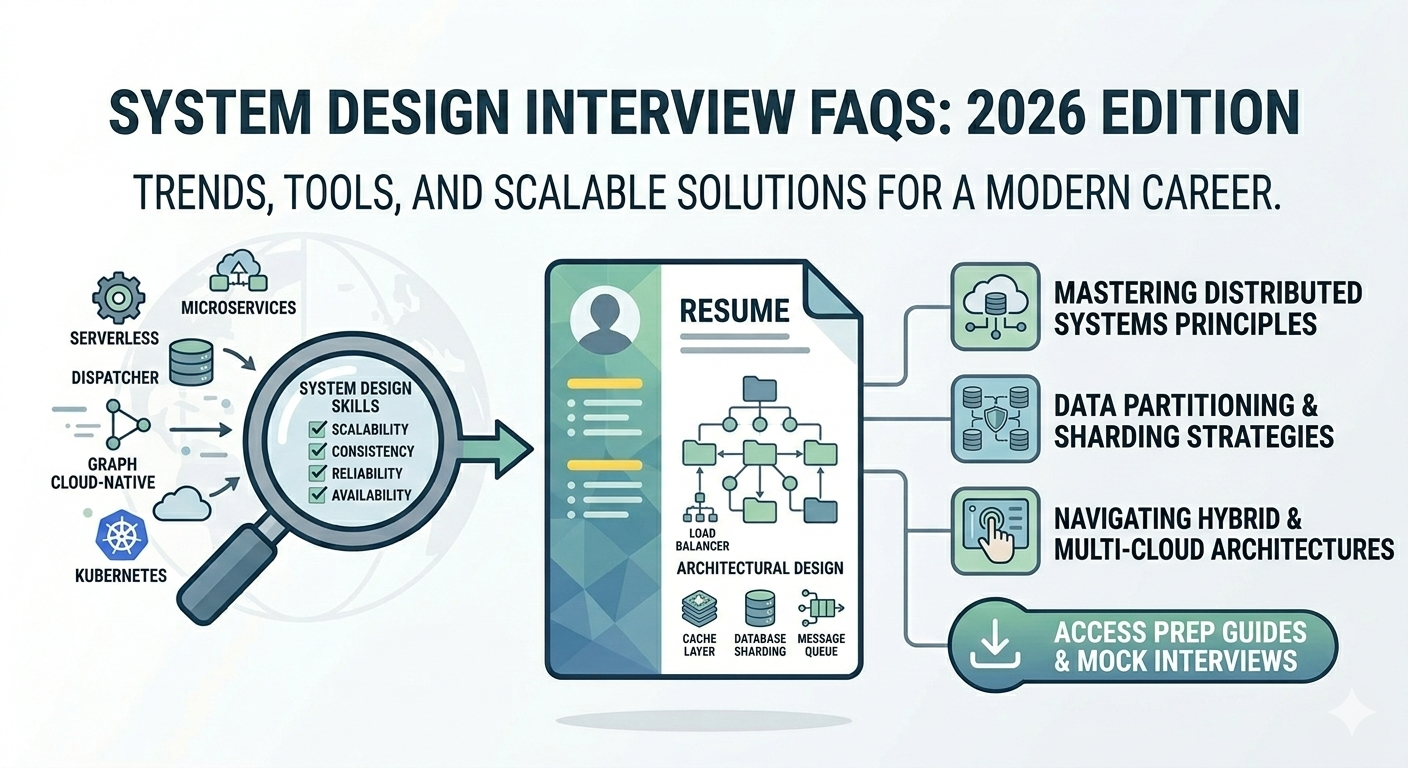
System Design intervew FAQs: 2026 edition
1. What is a system design interview and why is it important?
A system design interview is a technical interview round where you are asked to design large-scale, real-world systems such as social media platforms, messaging systems, ride-sharing apps, or payment systems. It is important because it evaluates how you think about scalability, reliability, databases, distributed systems, and architectural trade-offs. In 2026, companies rely heavily on the system design interview to determine whether a candidate can handle production-level challenges beyond writing code.
2. How should I start answering a system design interview question?
You should always start by clarifying requirements. A strong system design interview answer begins with understanding functional and non-functional requirements before drawing any architecture. Ask about users, scale, latency expectations, availability requirements, and scope. This structured beginning sets the foundation for a clear and logical system design interview response.
3. How much experience do I need for a system design interview?
You do not need to be a distributed systems expert to clear a system design interview. Even engineers with two to three years of experience are expected to understand the basics of scalability, databases, caching, and load balancing. What matters most in a system design interview is structured thinking, communication clarity, and the ability to reason through trade-offs logically.
4. How do I estimate scale during a system design interview?
During a system design interview, scale estimation is done using rough calculations. Estimate daily active users, requests per second, storage growth, and read-to-write ratios. You do not need exact numbers. The goal is to show that you understand how scale affects architecture decisions such as sharding, replication, and caching.
5. What are the most common mistakes in a system design interview?
Common mistakes in a system design interview include jumping into architecture without clarifying requirements, ignoring scale, failing to discuss trade-offs, overcomplicating the design, and not addressing bottlenecks. Another frequent mistake is naming technologies without explaining why they were chosen. A successful system design interview focuses on reasoning, not memorization.
6. How can I practice effectively for a system design interview?
The best way to prepare for a system design interview is to practice complete end-to-end questions under time constraints. Simulate real interview conditions, explain your thinking aloud, and refine your structure. Taking mock interviews and receiving expert feedback can significantly improve your system design interview performance because communication is just as important as technical knowledge.
7. How long does it take to prepare for a system design interview?
Preparation time for a system design interview depends on your current experience level. With focused and structured preparation, many engineers can become interview-ready within two to three months. If you follow a disciplined roadmap, practice consistently, and refine your weak areas, you can realistically aim to crack your system design interview and get a job in 90 days.
8. What topics should I master before attending a system design interview?
Before attending a system design interview, you should understand database fundamentals, SQL vs NoSQL differences, indexing, caching strategies, load balancing, horizontal and vertical scaling, replication, sharding, CAP theorem basics, and high availability concepts. Mastering these foundational topics will give you the confidence to handle most system design interview questions in 2026.
Want a Personalized Plan to land interviews and clear them to land job offers?
If you want a structured roadmap, real feedback, and mentorship from FAANG engineers, here is how we can help:
- Career Guidance Program (to get interview calls) – Resume review & job search tips – Everyone Who Codes
- 1:1 DSA / System Design / Interview Mentorship to clear interviews – 1 : 1 Tech Mentorship – Everyone Who Codes
- Real Mock Interviews with Expert FAANG Engineers – Mock Interviews – Everyone Who Codes