Skip to content
Preparing for a software developer interview in 2026 can feel overwhelming, especially if you are just starting your career. The good news is that beginner-level interviews follow very predictable patterns. Interviewers are not trying to trick you. They want to confirm that you understand core concepts, can think logically, and can explain your ideas clearly.
If you are still building your fundamentals, many beginners start by using free learning resources to practice core concepts at their own pace before stepping into interviews. A curated collection of beginner-friendly material can be found here:
https://everyonewhocode.com/free-resources/
This beginner section is designed for developers with 0 to 1 year of experience, students, career switchers, or anyone preparing for their first few technical interviews. We will move step by step, starting with foundational concepts and slowly building confidence.
What interviewers expect from beginners in 2026
At the beginner level, interviewers focus less on speed and more on understanding. They want to see that you know the basics well enough to grow into the role. You are not expected to know complex system design or advanced algorithms yet.
In 2026, beginner interviews still test the same fundamentals as previous years, but with more emphasis on clarity, real-world awareness, and clean thinking. Interviewers look for developers who can explain what their code is doing and why they made certain choices.
If you understand the questions in this section, you already meet the expectations for most junior software developer roles.
What is software development?
This question is often used as an icebreaker, but interviewers listen closely to how you answer.
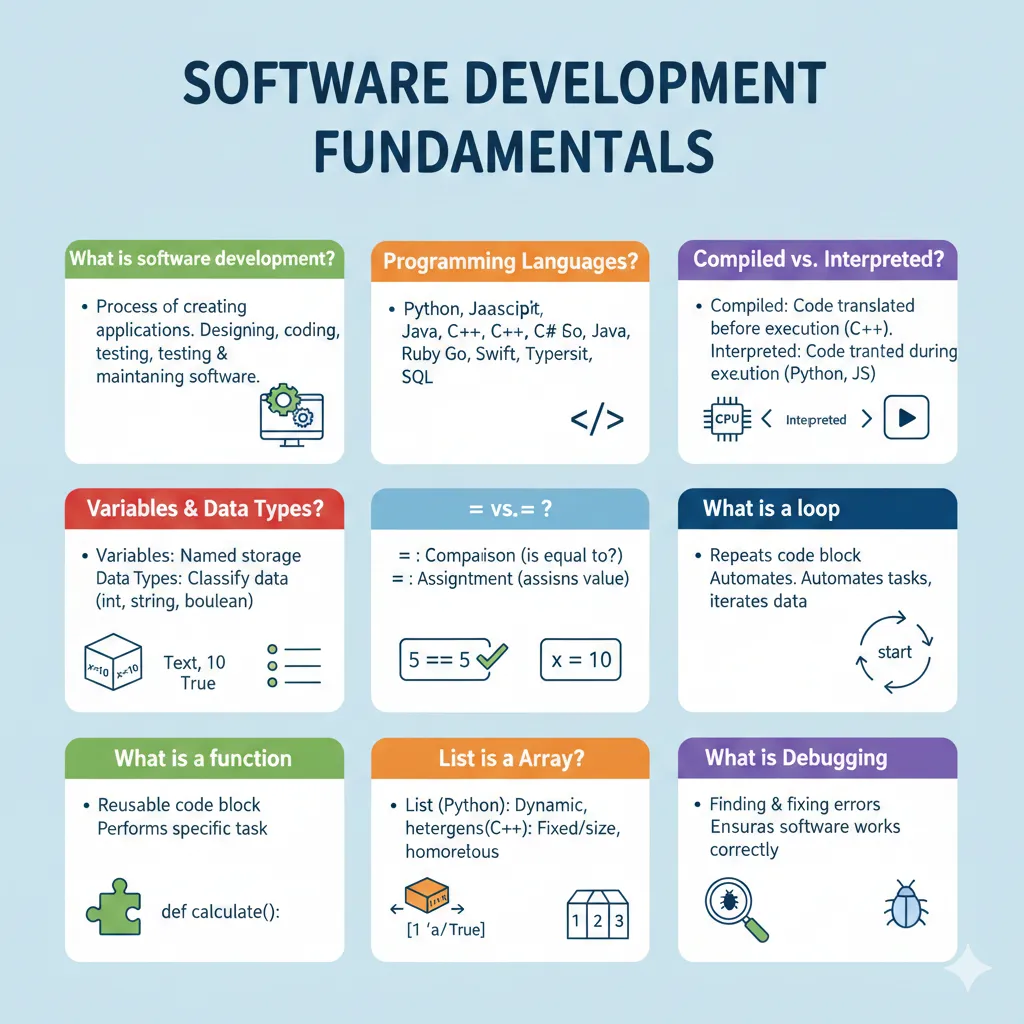
Software development is the process of designing, building, testing, and maintaining computer programs that solve real-world problems. A software developer writes code, but also thinks about how users will interact with the software, how it can be improved over time, and how to fix issues when something breaks.
A strong beginner answer shows that you understand software is more than just writing code. It is about problem-solving and creating reliable solutions.
Example answer:
Software development is the process of creating applications or systems by writing code, testing it, and improving it over time so it solves a specific problem or meets user needs.
What programming languages are you familiar with?
This question checks honesty and self-awareness more than depth.
Interviewers are not expecting you to know many languages. They want to know which language you are most comfortable with and how well you understand it. In 2026, Python, JavaScript, Java, and C# are still the most common beginner languages.
A good answer focuses on one main language and briefly mentions others if applicable.
Example answer:
I am most comfortable with Python. I have used it for basic data structures, writing functions, and small projects. I also have some exposure to JavaScript for simple frontend work.
What is the difference between compiled and interpreted languages?
This is a classic beginner question because it tests conceptual understanding without requiring deep experience.
Compiled languages are converted into machine code before the program runs. Interpreted languages are executed line by line at runtime. Some modern languages use a mix of both approaches, which is good to mention but not required.
Example answer:
A compiled language is translated into machine code before execution, which usually makes it faster. An interpreted language runs code line by line at runtime, which makes it easier to debug but sometimes slower.
What are variables and data types?
This question confirms that you understand how programs store and use data.
A variable is a container that holds a value, and a data type defines what kind of value it is. Common data types include integers, strings, booleans, and floating-point numbers.
Example answer:
A variable is used to store data in a program. A data type tells the program what kind of data it is, like a number, text, or true or false value.
You may be asked to give a small code example in your preferred language, so make sure you can explain it in simple words.
What is the difference between == and = ?
This question appears simple, but many beginners struggle to explain it clearly.
The equals sign with one equals is used to assign a value to a variable. The double equals sign is used to compare two values and check if they are equal.
Example answer:
The single equals sign assigns a value to a variable, while the double equals sign compares two values to see if they are the same.
If you are using JavaScript, the interviewer may ask about === as well, but that usually comes later in the interview.
What is a loop and why is it used?
Loops are a fundamental concept, and interviewers want to know if you understand why they exist, not just how to write them.
A loop allows you to run the same block of code multiple times without rewriting it. Loops are commonly used when working with lists, repeating tasks, or processing large amounts of data.
Example answer:
A loop is used to repeat a block of code multiple times. It helps avoid writing the same code again and again, especially when working with collections of data.
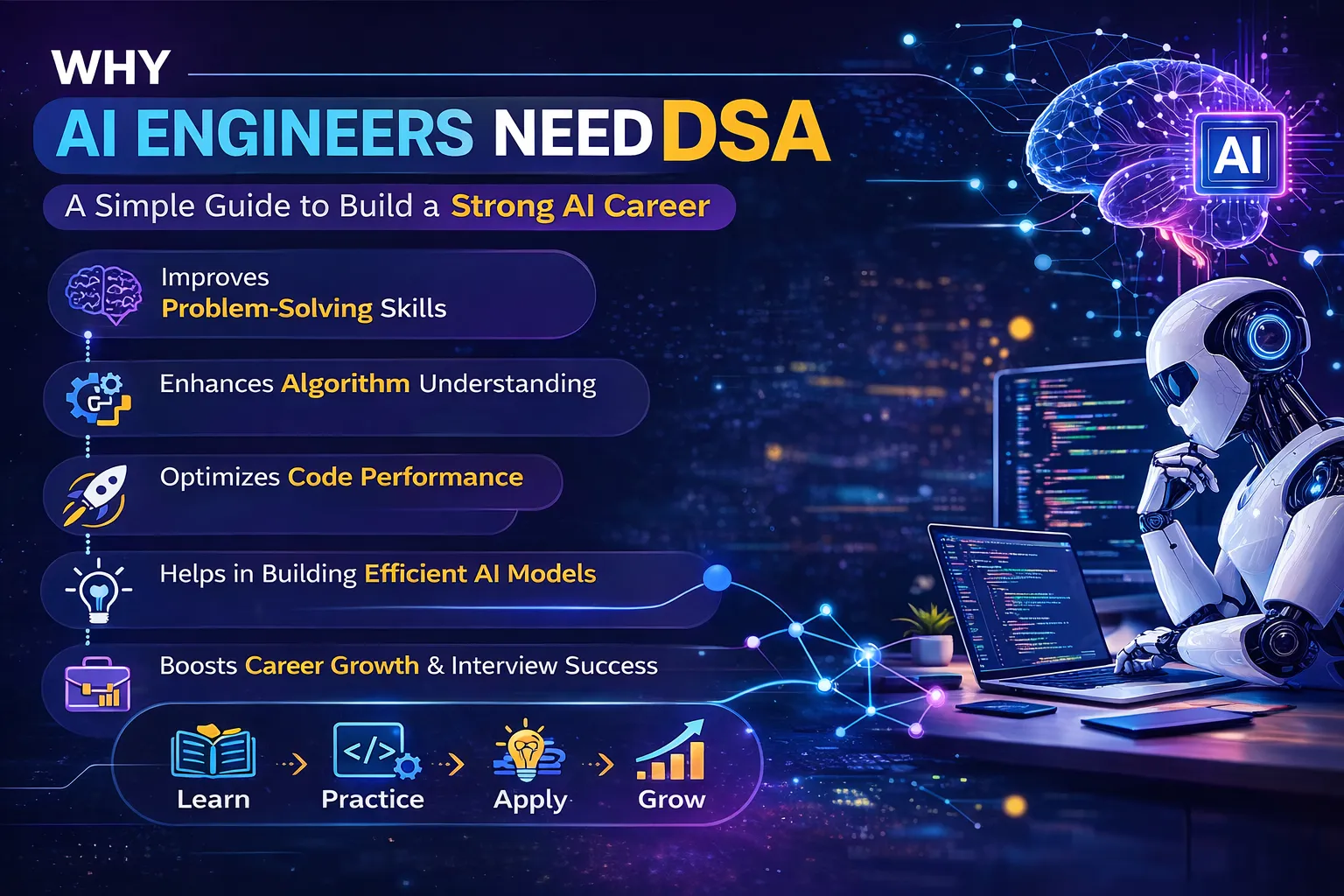
As beginners move forward, many start practicing loops alongside data structures and algorithms, since these topics frequently appear together in interviews. A practical guide that explains this clearly can be found here:
https://everyonewhocode.com/how-to-prepare-data-structures-and-algorithms-for-interviews-a-clear-practical-guide-that-actually-works/
What is a function?
Functions show whether you understand code organization.
A function is a reusable block of code that performs a specific task. Functions help make code cleaner, easier to read, and easier to maintain.
Example answer:
A function is a block of code that performs a specific task and can be reused whenever needed. It helps keep the code organized and avoids repetition.
Interviewers often follow this question by asking why functions are important in real projects.
What is the difference between a list and an array?
This question tests basic data structure knowledge.
Arrays usually store elements of the same type and have a fixed size in many languages. Lists are often more flexible and can grow or shrink dynamically, depending on the language.
Example answer:
An array usually has a fixed size and stores similar data types, while a list is more flexible and can change size during execution.
The exact answer can vary slightly by language, and interviewers are fine with that at the beginner level.
What is debugging?
Debugging is a real-world skill, and interviewers want to see how you think when something goes wrong.
Debugging is the process of finding and fixing errors in a program. This can involve reading error messages, checking logs, using a debugger, or printing values to understand what the code is doing.
Example answer:
Debugging is the process of identifying and fixing problems in code so the program works as expected.
A strong beginner answer may include a short example of how you debugged a simple issue.
Why beginner interviews focus on fundamentals
At the beginner level, companies are hiring for potential, not perfection. If you understand these concepts and can explain them calmly and clearly, you are already ahead of many candidates.
Strong fundamentals make it easier to learn advanced topics later, which is why interviewers spend so much time on basic questions. Some learners speed up this process by combining self-study with one-on-one mentorship, especially when preparing for real interview scenarios. Structured guidance options are available here:
https://everyonewhocode.com/services/1-1-tech-mentorship/
If you’re planning your next steps, exploring structured learning paths, mentorship, and practice material can help you stay consistent. You can also visit the main learning platform to see all available programs and updates:
https://everyonewhocode.com/
Mastering Data Structures & Algorithms – Everyone Who Codes

A moody, low-light developer scene introducing an expert-level programming guide, with source code displayed on a laptop.
Software developer interview questions 2026: intermediate level guide
Once you have one to three years of experience, interviews start to feel different. At this stage, interviewers assume you already know the basics. They now want to understand how you apply those fundamentals in real projects, how you think through problems, and how you handle trade-offs.
Intermediate software developer interviews in 2026 focus heavily on practical problem-solving. You are expected to write cleaner code, reason about performance, and explain decisions based on real-world experience rather than theory alone. Many developers at this stage start refining their skills by following structured learning paths and hands-on practice, especially when preparing for more competitive roles. Exploring curated practice material can be helpful, such as the resources available here:
https://everyonewhocode.com/free-resources/
This section is designed for developers who have worked on production code, contributed to team projects, or maintained real applications.
What interviewers expect from intermediate developers?
At this level, interviewers look for evidence that you can work independently with some guidance. They want to see that you understand how software behaves in real environments and that you can explain why one solution is better than another.
You are not expected to design massive systems on your own, but you should be comfortable discussing performance, debugging complex issues, and improving existing code.
Communication becomes just as important as coding in intermediate interviews.
How do you approach solving a coding problem?
This question is less about the final answer and more about your thinking process.
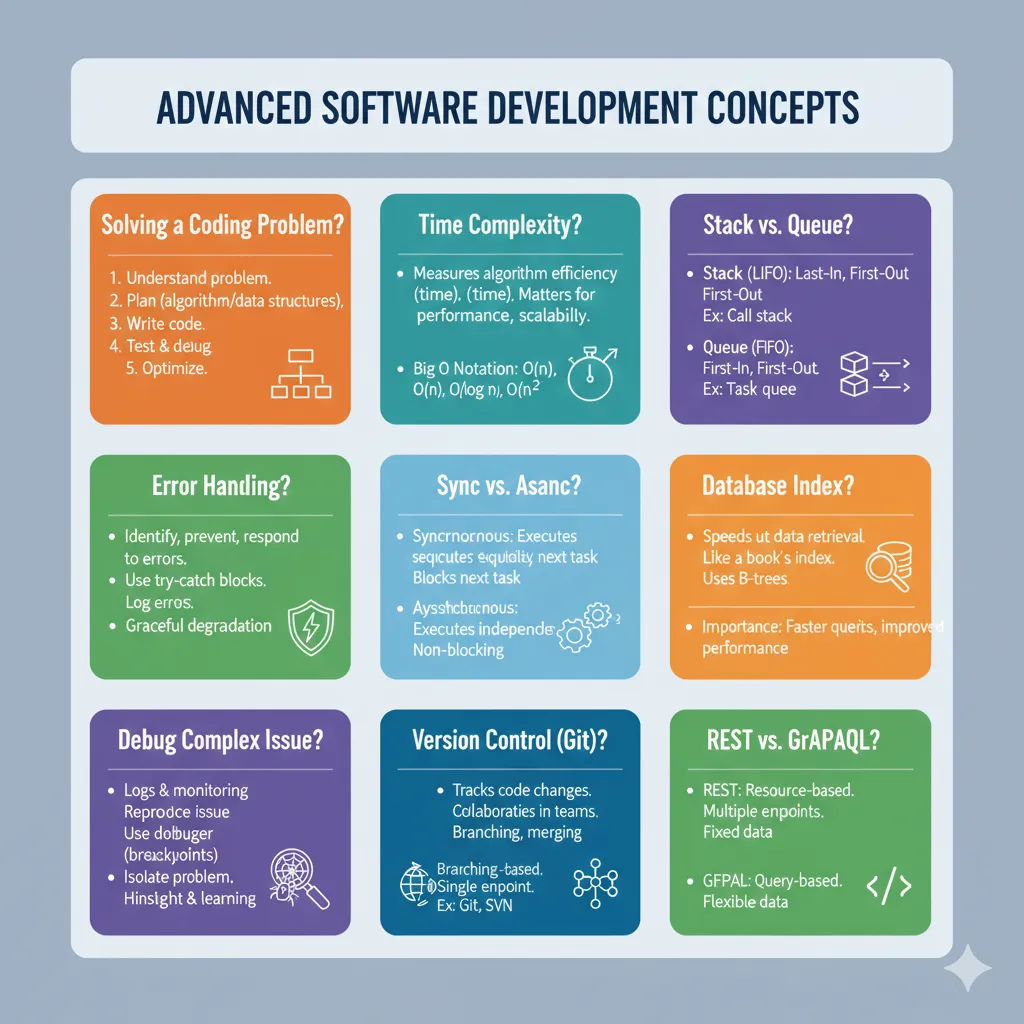
Interviewers want to hear how you break down a problem, clarify requirements, and choose a solution. They want to know whether you jump straight into coding or take time to think first.
A strong answer explains your steps clearly and shows that you care about correctness and readability.
Example answer:
I first make sure I understand the problem and edge cases. Then I think about a simple solution before optimizing it. Once I’m confident in the approach, I write clean code and test it with a few examples.
What is time complexity and why does it matter?
At the intermediate level, Big O notation is no longer optional.
Interviewers expect you to explain how efficient your solution is and why that matters when working with larger data sets. You don’t need to memorize every formula, but you should understand common complexities like constant time, linear time, and logarithmic time.
Example answer:
Time complexity describes how a program’s runtime grows as the input size increases. It matters because inefficient code can become very slow when working with large amounts of data.
As developers progress at this stage, many start pairing complexity analysis with focused data structures and algorithms practice, since these topics are frequently evaluated together in interviews. A clear, practical guide on this topic can be found here:
https://everyonewhocode.com/how-to-prepare-data-structures-and-algorithms-for-interviews-a-clear-practical-guide-that-actually-works/
You may be asked to compare two solutions and explain which one scales better and why.
What is the difference between a stack and a queue?
This question checks whether you understand basic data structures beyond definitions.
A stack follows a last-in, first-out order, while a queue follows a first-in, first-out order. Interviewers often ask when you would use one over the other.
Example answer:
A stack removes the most recently added item first, while a queue removes the oldest item first. A stack is useful for things like undo operations, and a queue works well for task scheduling.
Showing a real-world use case strengthens your answer at this level.
How do you handle errors and exceptions?
Intermediate developers are expected to write safer and more reliable code.
This question tests whether you think about failure cases and user experience. Interviewers want to know how you prevent crashes and handle unexpected situations gracefully.
Example answer:
I use proper error handling to catch exceptions, log useful information, and return meaningful messages. This helps prevent crashes and makes debugging easier.
You may also be asked how error handling differs between languages you’ve used.
What is the difference between synchronous and asynchronous code?
This is a very common intermediate-level question, especially for web developers.
Synchronous code runs one task at a time and blocks execution until it finishes. Asynchronous code allows tasks to run in the background so the program stays responsive.
Example answer:
Synchronous code waits for each task to finish before moving on, while asynchronous code allows other tasks to run at the same time. Asynchronous programming is useful for things like network requests or file operations.
Interviewers may follow up by asking where you have used async code in real projects.
What is a database index and why is it important?
This question bridges coding and real-world performance.
A database index improves the speed of data retrieval by creating a structure that allows faster searches. Without indexes, databases may need to scan entire tables, which becomes slow as data grows.
Example answer:
A database index helps speed up queries by making it faster to find rows in a table. It improves read performance but can slightly slow down writes.
Understanding trade-offs is key at this level.
How do you debug a complex issue in production?
This is where experience really shows.
Interviewers want to know how you stay calm, collect information, and avoid making things worse. They care about your process more than the specific tools you use.
Example answer:
I start by understanding the impact and checking logs or monitoring data. Then I try to narrow down the cause, reproduce the issue if possible, and apply a fix carefully. Afterward, I make sure the issue is documented so it doesn’t happen again.
This answer shows responsibility and structured thinking.
What is version control and how do you use it in a team?
At the intermediate level, it is assumed you have used version control in real projects.
Interviewers want to know how comfortable you are with branching, merging, and collaborating with others.
Example answer:
I use version control to track changes, work on separate branches, and collaborate with my team. It helps prevent conflicts and makes it easier to review and roll back changes when needed.
Mentioning pull requests or code reviews adds credibility.
What is the difference between REST and GraphQL?
This question checks your exposure to modern APIs.
REST uses multiple endpoints for different resources, while GraphQL allows clients to request exactly the data they need from a single endpoint.
Example answer:
REST uses fixed endpoints and responses, while GraphQL allows clients to request specific fields. GraphQL reduces over-fetching but can be more complex to set up.
You are not expected to be an expert, just familiar with the concepts.
How intermediate interviews differ from beginner interviews
At this stage, interviewers expect you to explain trade-offs, not just definitions. They want examples from your work and evidence that you’ve learned from real problems.
You are being evaluated on judgment, not just correctness. Many developers at this level benefit from feedback-driven preparation, such as mock interviews or one-on-one mentorship, especially when aiming for mid-level or senior roles. Structured mentoring options are available here:
https://everyonewhocode.com/services/1-1-tech-mentorship/
If you can clearly explain your thinking, handle follow-up questions, and connect concepts to real projects, you are well-prepared for intermediate software developer interviews in 2026.
To explore additional learning paths, interview prep material, and updates, you can also visit the main platform here:
https://everyonewhocode.com/services/mastering-data-structures-algorithms/
A moody, low-light developer scene introducing an expert-level programming guide, with source code displayed on a laptop.
Software developer interview questions 2026: expert level guide
At the senior level, software developer interviews change completely. The focus is no longer on whether you can write code. Interviewers already assume you can. What they want to understand is how you think at scale, how you make decisions under uncertainty, and how your work impacts teams, systems, and the business.
For developers with five or more years of experience, interviews in 2026 are about leadership, architecture, and judgment. You are evaluated as someone who shapes systems and influences others, not just someone who completes tasks. Many senior developers refine this mindset by continuously learning from real-world case studies, peer discussions, and long-form technical material. Having access to curated learning resources and up-to-date engineering content can be helpful at this stage, such as those available here:
https://everyonewhocode.com/free-resources/
This section reflects what senior and staff-level interviews actually look like today.
What interviewers expect from expert developers?
Interviewers expect you to demonstrate ownership. That means owning technical decisions, production outcomes, and long-term system health. You are expected to reason about trade-offs, explain why you rejected certain approaches, and show awareness of business constraints.
At this level, a perfect technical answer matters less than a well-reasoned one. Clarity, calm decision-making, and real-world experience are the strongest signals of seniority.
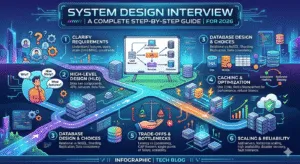
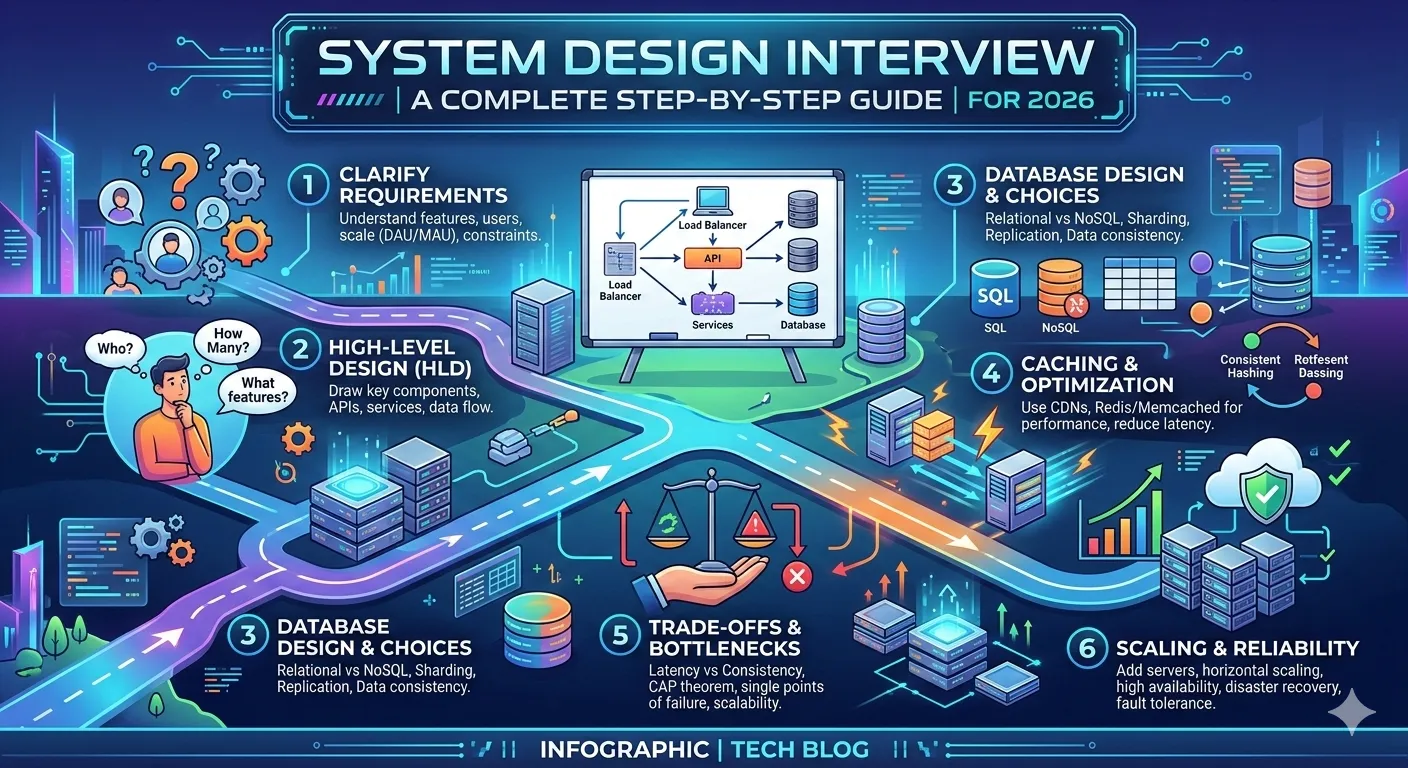
How do you design a scalable system?
This is one of the most important questions at the expert level.
Interviewers are not looking for a single “correct” architecture. They want to see how you approach ambiguity, ask clarifying questions, and build a solution that can evolve over time.
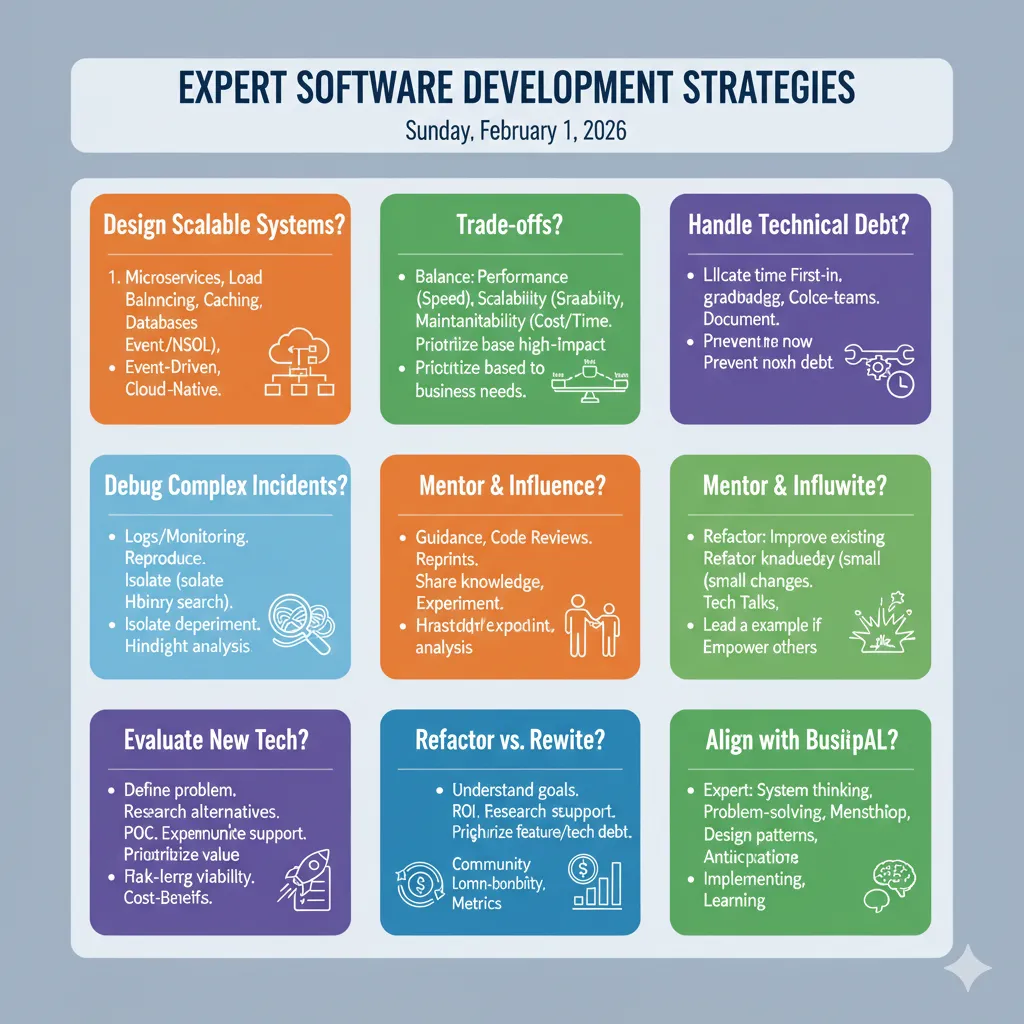
A strong answer starts with understanding requirements such as scale, traffic patterns, reliability, and cost. From there, you explain how you would structure services, data storage, caching, and communication between components.
Example answer:
I start by clarifying requirements like expected traffic, growth, and failure tolerance. I design a simple system first, then identify bottlenecks and add components like caching, load balancing, or data partitioning as needed. I prefer designs that are easy to evolve rather than over-engineered from the start.
This answer shows experience and restraint, which interviewers value highly.
How do you make trade-offs between performance, scalability, and maintainability?
Senior interviews often revolve around trade-offs.
Every system decision has consequences. Interviewers want to know if you can explain why you chose one approach over another and what you gave up in the process.
Example answer:
I prioritize maintainability early on, because systems change more than we expect. If performance becomes a bottleneck, I optimize based on real data rather than assumptions. Scalability decisions depend on actual usage patterns and business priorities.
This shows maturity and data-driven thinking.
How do you handle technical debt?
Technical debt is unavoidable at scale, and senior developers are expected to manage it, not eliminate it entirely.
Interviewers want to know how you balance speed and quality, especially under deadlines.
Example answer:
I treat technical debt as a business decision. Some debt is acceptable if it helps deliver value quickly, but I make sure it’s documented and addressed before it becomes risky. I prioritize debt that slows development or increases failure rates.
Senior developers often develop this judgment by repeatedly working through real production systems and long-term codebases, especially when paired with structured reflection or advanced interview preparation focused on architecture and decision-making. Resources that walk through these scenarios in depth can be useful, such as this practical guide on advanced interview preparation:
https://everyonewhocode.com/how-to-prepare-data-structures-and-algorithms-for-interviews-a-clear-practical-guide-that-actually-works/
How do you approach debugging complex production incidents?
At the expert level, debugging is about systems, not just code.
Interviewers want to hear how you stay composed during incidents, lead investigations, and prevent repeat failures.
Example answer:
I focus first on restoring service and reducing impact. After that, I analyze logs, metrics, and recent changes to find the root cause. I believe in blameless postmortems that focus on improving systems, not assigning fault.
This response signals leadership and reliability.
How do you mentor and influence other developers?
Senior developers are expected to raise the level of the entire team.
This question evaluates communication, empathy, and leadership.
Example answer:
I mentor by giving clear feedback, pairing on complex problems, and encouraging developers to think through decisions rather than giving answers immediately. I try to create an environment where asking questions feels safe.
Interviewers value seniors who grow teams, not just codebases.
How do you decide when to refactor versus rewrite?
This question tests judgment and experience.
Rewrites are risky, and senior developers are expected to understand when they are justified.
Example answer:
I refactor when the system still meets core needs but has areas that can be improved incrementally. I consider a rewrite only when the current system blocks progress and refactoring would take longer than rebuilding with clear goals.
This shows practical decision-making.
How do you evaluate new technologies or tools?
In 2026, technology choices matter more than ever.
Interviewers want to know how you avoid chasing trends while still staying current.
Example answer:
I evaluate new tools based on team fit, long-term support, and real benefits. I avoid introducing new technology unless it clearly solves an existing problem or improves reliability or developer productivity.
This demonstrates discipline and strategic thinking.
How do you align technical decisions with business goals?
At senior levels, technical work is closely tied to business outcomes.
Interviewers want to see that you understand this connection.
Example answer:
I make sure I understand business priorities before making technical decisions. I explain trade-offs in terms of cost, risk, and delivery timelines so stakeholders can make informed choices.
This shows strong cross-functional communication.
What separates expert developers from intermediate ones
Expert developers think in systems, not tasks. They anticipate failure, design for change, and communicate clearly with both technical and non-technical stakeholders.
They are trusted to make decisions that affect the entire organization, and they understand that good software is built through collaboration, not just code.
Final thoughts on senior-level interviews in 2026
Senior software developer interviews are not about memorizing answers. They are conversations about experience, judgment, and impact. Interviewers want to understand how you’ve handled real problems and how you would approach future ones.
Many senior candidates sharpen their interview performance through feedback-driven preparation, peer discussions, or one-on-one mentorship, especially when aiming for staff or principal-level roles. Structured mentoring support is available here:
https://everyonewhocode.com/services/1-1-tech-mentorship/
Mastering Data Structures & Algorithms – Everyone Who Codes
If you want to explore additional learning paths, interview prep material, and ongoing updates, you can also visit the main platform here:
https://everyonewhocode.com/
Mastering System design – Everyone Who Codes

Frequently asked questions about software developer interview questions in 2026
How should I prepare for a software developer interview in 2026?
Start by strengthening your fundamentals, including programming basics, data structures, and problem-solving. Practice explaining your thinking out loud, review real interview questions by experience level, and work on small projects that show how you apply concepts in real scenarios. Consistency matters more than cramming.
What programming languages are best for software developer interviews in 2026?
Python, JavaScript, Java, and C# are still the most commonly accepted languages in interviews. The best choice is the language you are most comfortable explaining and writing clean code in, rather than trying to learn a new one just for interviews.
How many coding questions should I expect in an interview?
This depends on the company and role. Beginner interviews often include one or two simple coding or logic questions. Intermediate interviews usually involve one main problem with follow-up questions. Senior interviews may include fewer coding questions and more system design or decision-based discussions.
Are data structures and algorithms still important in 2026?
Yes. Data structures and algorithms are still a core part of software developer interviews, especially for mid-level and senior roles. Interviewers use them to evaluate problem-solving skills, efficiency, and how well you understand trade-offs.
Mastering Data Structures & Algorithms – Everyone Who Codes
What do interviewers look for besides correct answers?
Interviewers care about how you think, how you communicate, and how you handle uncertainty. Explaining your approach, asking clarifying questions, and discussing trade-offs are often more important than writing a perfect solution.
How are senior software developer interviews different from junior ones?
Senior interviews focus less on syntax and more on system design, architecture, leadership, and decision-making. Interviewers want to understand how you handle scale, mentor others, manage technical debt, and align technical work with business goals.
Do I need system design knowledge for all roles?
System design is usually expected for senior and staff-level roles. For beginner and intermediate roles, basic understanding of how systems work together is helpful, but deep design discussions are usually not required.
Mastering System design – Everyone Who Codes
How should I handle questions I don’t know the answer to?
Be honest and explain how you would approach finding the answer. Interviewers prefer candidates who think logically and ask good questions rather than guessing or staying silent.
Is it okay to make mistakes during an interview?
Yes. Making small mistakes is normal. What matters is how you recognize them, correct them, and continue calmly. Interviewers often see mistakes as an opportunity to understand how you think under pressure.
How long should I prepare before a software developer interview?
For beginners, 2 to 3 months of consistent preparation is common. Intermediate and senior developers often spend a few weeks revisiting fundamentals, practicing problem-solving, and preparing system design and behavioral examples.
Everyone Who Codes offers 1:1 guidance to help you land tech interviews and convert them into job offers.
👉 Book your 1:1 consultation with Everyone Who Codes and start landing job offers with clarity.