If you are planning to build a career in technology today, one of the most important decisions you will face is choosing between becoming a Machine Learning Engineer or a software engineer. With the rise of AI, it is easy to assume that machine learning is the future and traditional software engineering may lose relevance. However, this assumption is incomplete and often misleading.
The reality is that both roles are not only relevant but deeply interconnected. Understanding their differences, responsibilities, required skills, and career paths will help you make a strategic decision instead of an emotional one.
At Everyone Who Codes, we guide learners through exactly these decisions with structured learning paths, real-world projects, and mentorship. If you want to start your journey with clarity, begin here: https://everyonewhocode.com
Understanding the core difference
At a foundational level, the difference between these two roles lies in how problems are solved.
A software engineer builds systems using explicit logic. Every feature is designed with clear instructions that define how the system behaves. When a user clicks a button or sends a request, the system responds based on predefined rules.
A Machine Learning Engineer, in contrast, builds systems that learn from data. Instead of writing every rule manually, they train models that identify patterns and make predictions. These systems improve over time as they are exposed to more data.
This difference changes everything from the way you think to the tools you use and the kind of problems you solve.
If you are serious about preparing DSA the right way, you should explore https://everyonewhocode.com/. https://everyonewhocode.com/services/mastering-data-structures-algorithms/
🔗 Career Guidance Program – Land Interviews – Resume review & job search tips – Everyone Who Codes
🔗 1:1 DSA/ System Design/ Behavioural Interview Mentorship – 1 : 1 Tech Mentorship – Everyone Who Codes
🔗 1:1 Mock Interviews – DSA/ System Design / Behavioral Interview – Mock Interviews – Everyone Who Codes
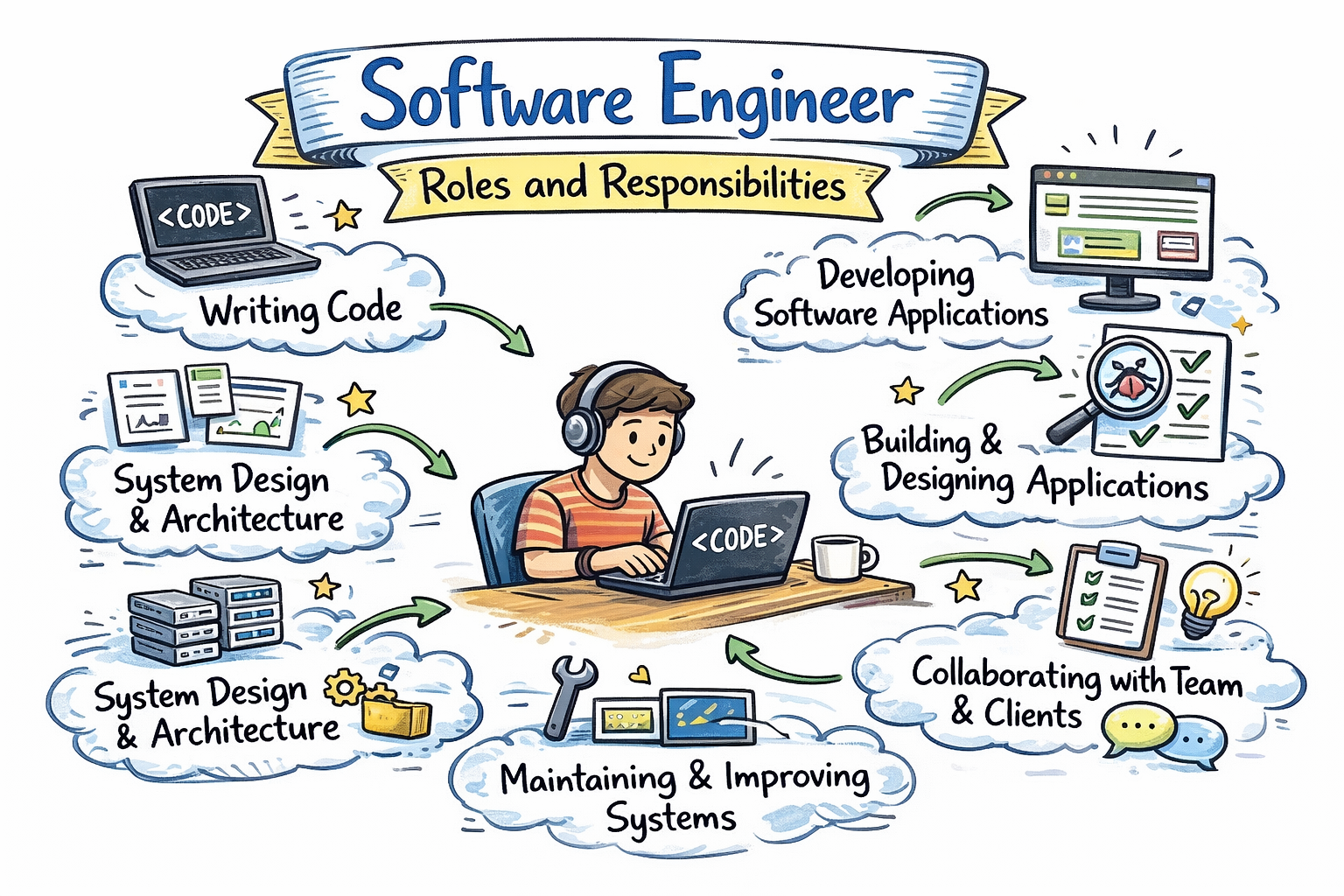
Roles and responsibilities of a Software Engineer
The role of a software engineer is broad, structured, and essential across all industries. They are responsible for building and maintaining systems that power applications, platforms, and digital services.
The journey begins with understanding requirements. A software engineer works closely with product managers and stakeholders to translate business needs into technical solutions. This stage involves careful planning because a poorly designed system can lead to long-term scalability issues.
Once requirements are clear, the next step is system design. This includes deciding how different components will interact, selecting databases, defining APIs, and ensuring the architecture can handle future growth. Strong engineers think beyond the present and design systems that remain efficient even as usage increases.
After design comes implementation. Writing code is not just about making things work—it is about writing code that is clean, maintainable, and scalable. Engineers follow best practices such as modular design, proper naming conventions, and version control to ensure long-term sustainability.
Testing is another critical responsibility. Software Engineers write unit tests, integration tests and perform debugging to ensure that the system behaves as expected under different conditions. This step is essential for delivering reliable products.
Deployment is not the end of the process. Once software is live, engineers monitor performance, fix bugs, and continuously improve the system. They handle real-world challenges such as high traffic, system failures, and security vulnerabilities.
In addition to technical work, collaboration is a major part of the role. Software Engineers work with designers, QA teams, DevOps engineers, and increasingly with Machine Learning Engineers to build complete products.
In essence, Software Engineers are responsible for creating the infrastructure and systems that make modern digital life possible.
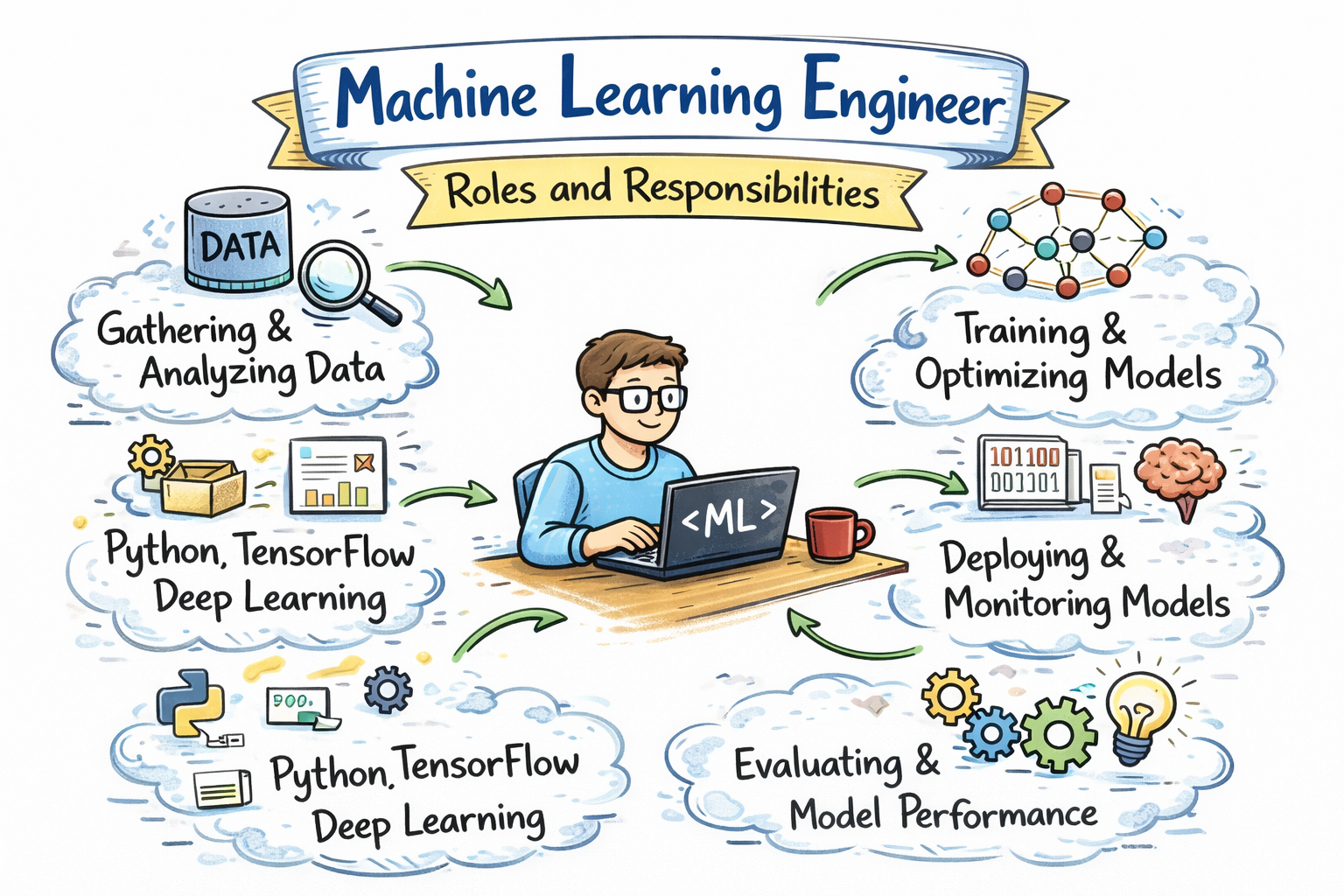
Roles and responsibilities of a Machine Learning Engineer
Machine Learning Engineers focus on building intelligent systems that can learn from data and make decisions.
Their work begins with problem definition. Instead of asking “what logic should we write,” they ask “what data can help us solve this problem?” This shift in thinking is what defines machine learning.
The next step is data collection and preprocessing. Real-world data is messy, incomplete, and inconsistent. A significant portion of a Machine Learning Engineer’s time is spent cleaning and preparing data so that it can be used effectively.
Once the data is ready, they move to model development. This involves selecting algorithms, training models, and experimenting with different approaches. Unlike traditional software, there is no single correct solution. Engineers must test multiple models and compare their performance.
Evaluation is a critical phase. Machine Learning Engineers use metrics such as accuracy, precision, recall, and F1-score to measure how well a model performs. They also analyze edge cases where the model fails and work to improve it.
After building a model, deployment becomes the focus. This is where machine learning meets software engineering. Models must be integrated into applications so that users can interact with them in real time. This requires knowledge of APIs, cloud platforms, and system design.
Even after deployment, the work continues. Models degrade over time as data changes, a phenomenon known as data drift. Machine Learning Engineers monitor performance, retrain models, and ensure that systems remain accurate and reliable.
They also collaborate extensively with data scientists and Software Engineers. While data scientists may focus on research and experimentation, ML engineers are responsible for making those solutions production-ready and scalable.
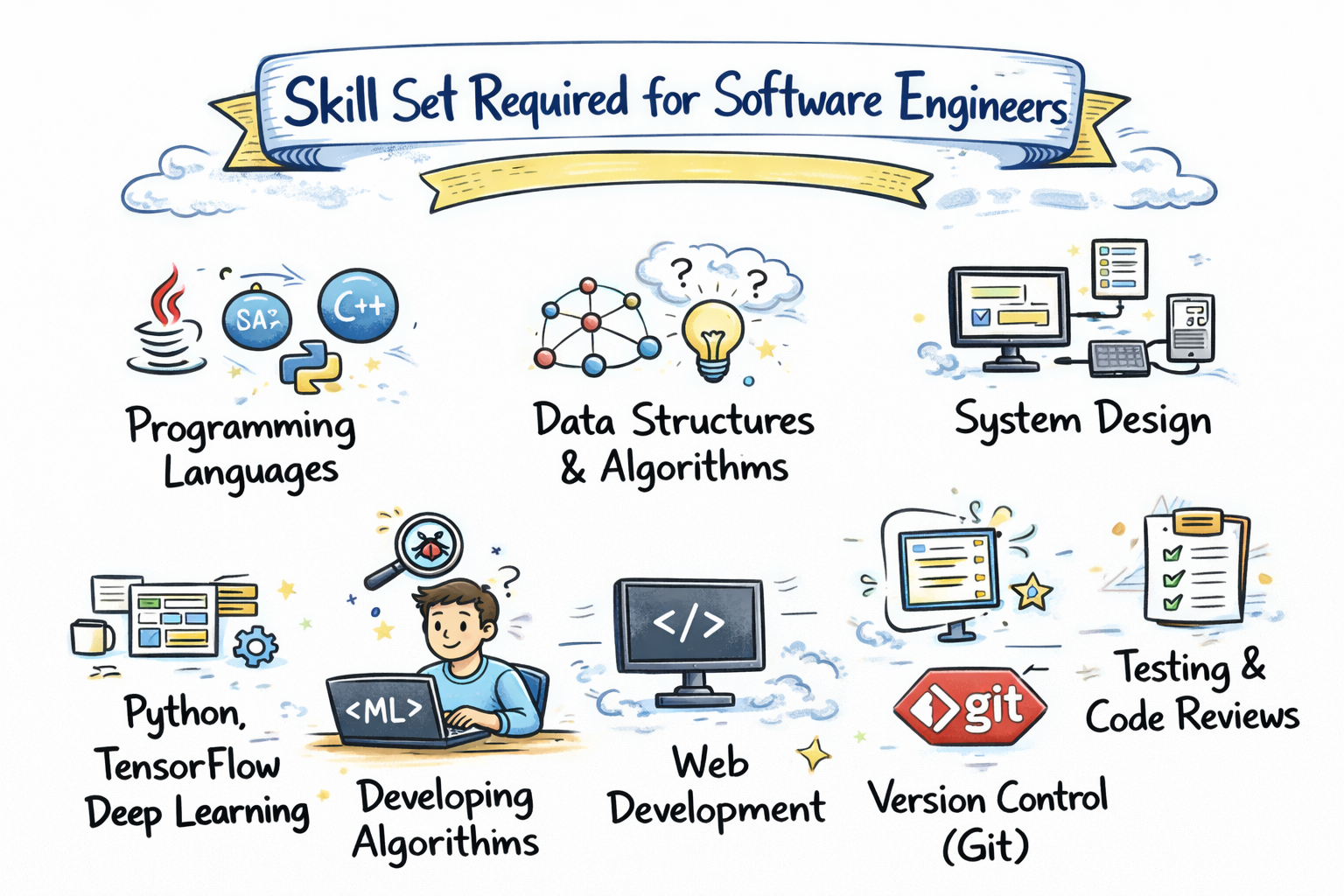
Skill set required for Software Engineers
The skill set required for software engineering is rooted in strong fundamentals and practical application.
Programming is the foundation. A software engineer must be proficient in at least one language such as Java, Python, or JavaScript. However, true expertise goes beyond syntax—it involves understanding how to write efficient, readable, and maintainable code.
Data structures and algorithms play a crucial role in problem-solving. Concepts such as arrays, linked lists, trees, and graphs are not just academic topics; they are used to build efficient systems and solve complex problems.
System design is another essential skill, especially as engineers progress in their careers. Understanding how to design scalable systems, manage databases, and handle distributed architectures is critical in real-world applications.
Familiarity with tools and technologies is equally important. This includes version control systems like Git, testing frameworks, and CI/CD pipelines that automate development workflows.
Debugging and optimization are everyday skills. Engineers must be able to identify issues quickly and improve system performance under real-world conditions.
Soft skills are often underestimated but highly valuable. Communication, teamwork, and the ability to understand business requirements can significantly impact career growth.
If you are serious about preparing DSA the right way, you should explore https://everyonewhocode.com/. https://everyonewhocode.com/services/mastering-data-structures-algorithms/
🔗 Career Guidance Program – Land Interviews – Resume review & job search tips – Everyone Who Codes
🔗 1:1 DSA/ System Design/ Behavioural Interview Mentorship to land job offers – 1 : 1 Tech Mentorship – Everyone Who Codes
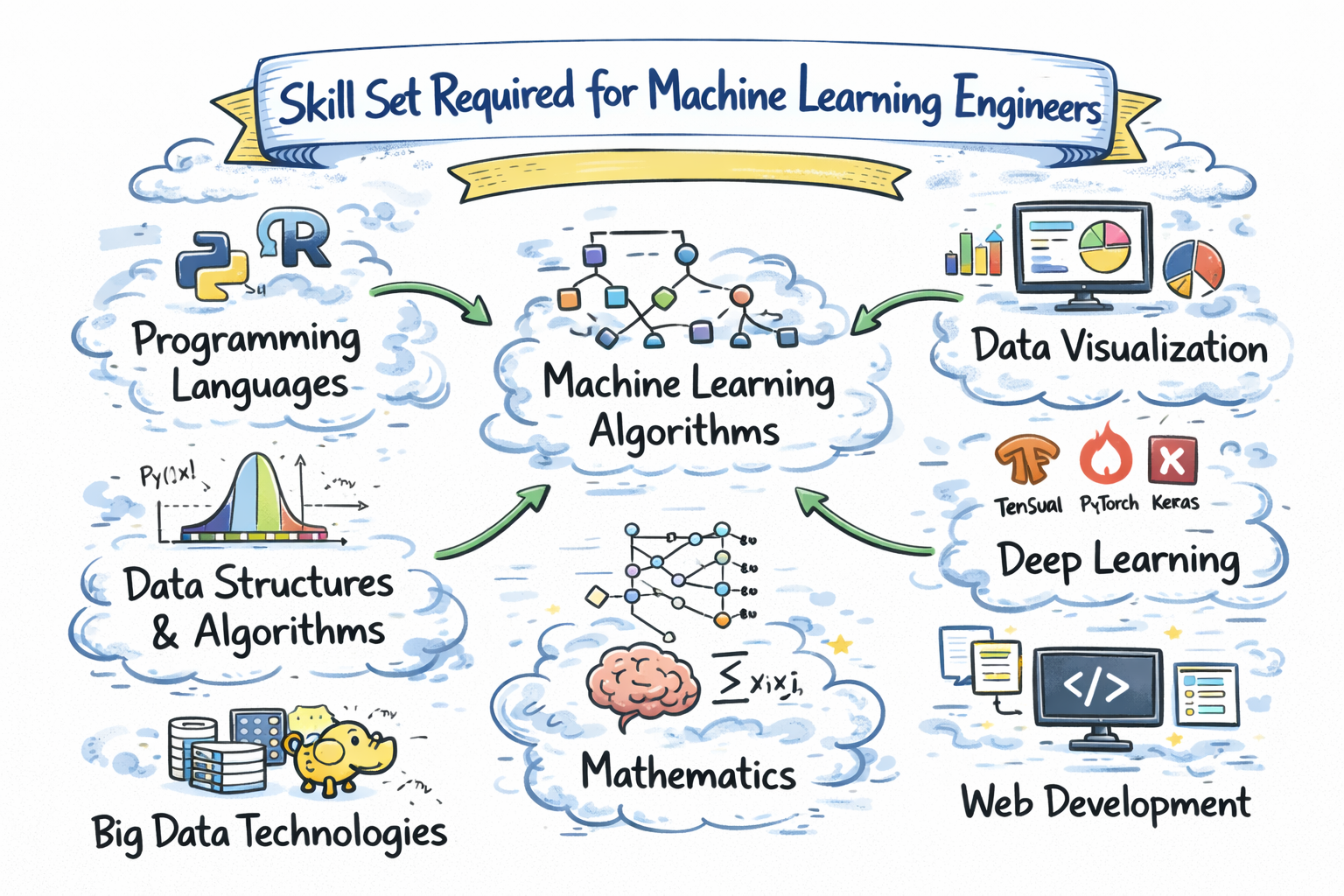
Skill set required for Machine Learning Engineers
Machine Learning Engineering requires a combination of technical depth and analytical thinking.
Mathematics forms the backbone of machine learning. Concepts from linear algebra, probability, and statistics are essential for understanding how models work and how to improve them.
Programming is equally important, with Python being the most widely used language in this field. Engineers must be comfortable working with libraries and frameworks such as TensorFlow, PyTorch, and scikit-learn.
Data handling is a core skill. This includes working with large datasets, cleaning data, and building pipelines that can process data efficiently. Without good data, even the best models will fail.
Model building and evaluation are central to the role. Engineers need to understand different algorithms, choose the right one for a given problem, and evaluate performance using appropriate metrics.
Another increasingly important skill is deployment. Machine Learning Engineers must know how to integrate models into production systems using APIs, cloud platforms, and containerization tools.
Finally, an experimental mindset is crucial. Machine learning is not about getting the right answer on the first try—it is about continuous iteration and improvement.
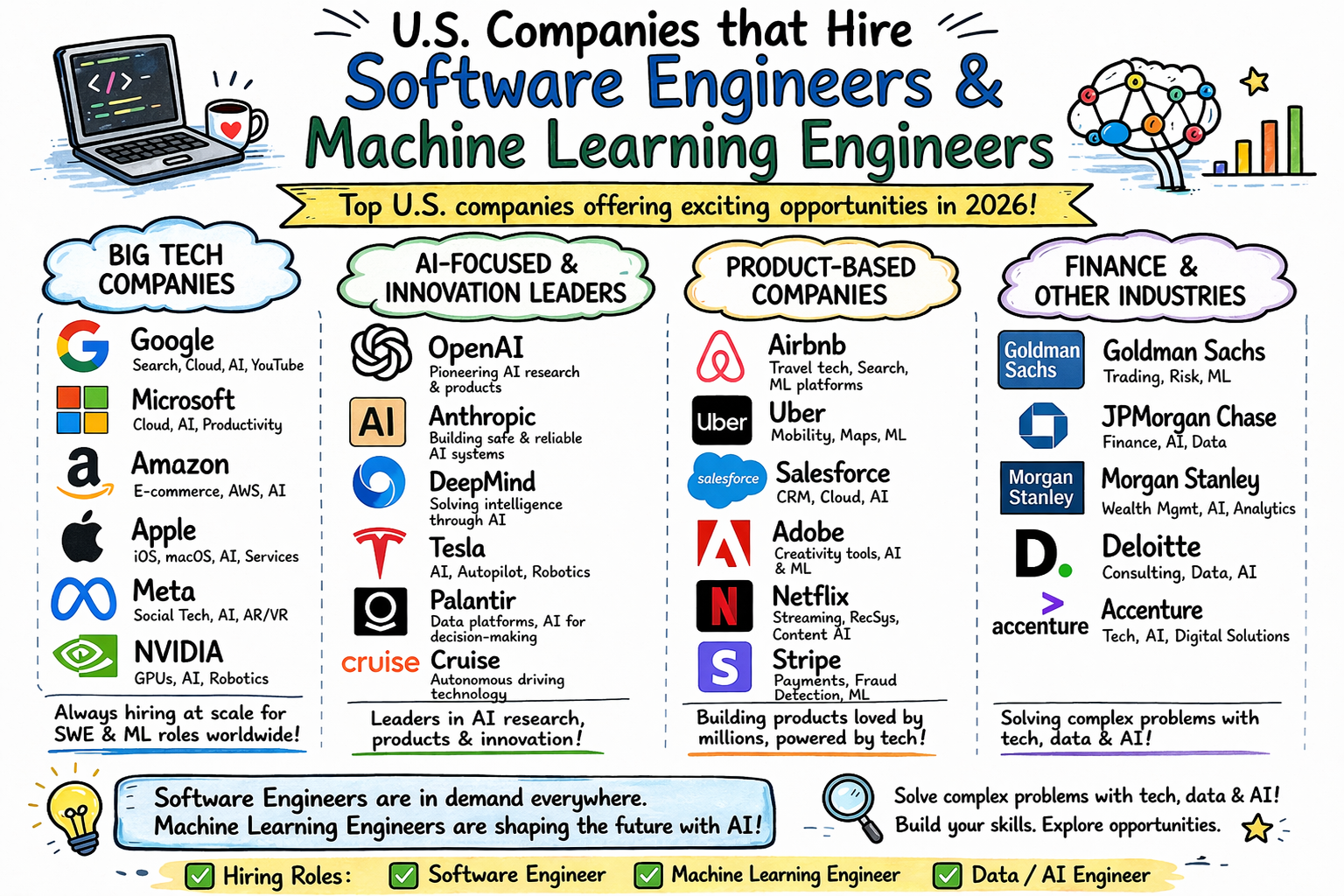
Companies that hire Software Engineers and Machine Learning Engineers
Software Engineers are hired across virtually every industry. Technology companies like Google, Amazon, Microsoft, and Apple are obvious examples, but the demand extends far beyond big tech. Startups, fintech companies, healthcare platforms, edtech firms, and even traditional businesses rely heavily on Software Engineers.
Machine Learning Engineers are in high demand in companies that rely on data-driven decision-making. Large technology companies such as Google, Meta, Amazon, Netflix, and Tesla invest heavily in machine learning to power their products. In addition, AI startups and research-focused organizations are actively hiring ML engineers.
In recent years, even non-tech companies have started building ML teams to improve operations, customer experience, and business intelligence. This trend is expected to grow significantly.
While software engineering offers a broader range of opportunities, machine learning roles are expanding rapidly as AI adoption increases.
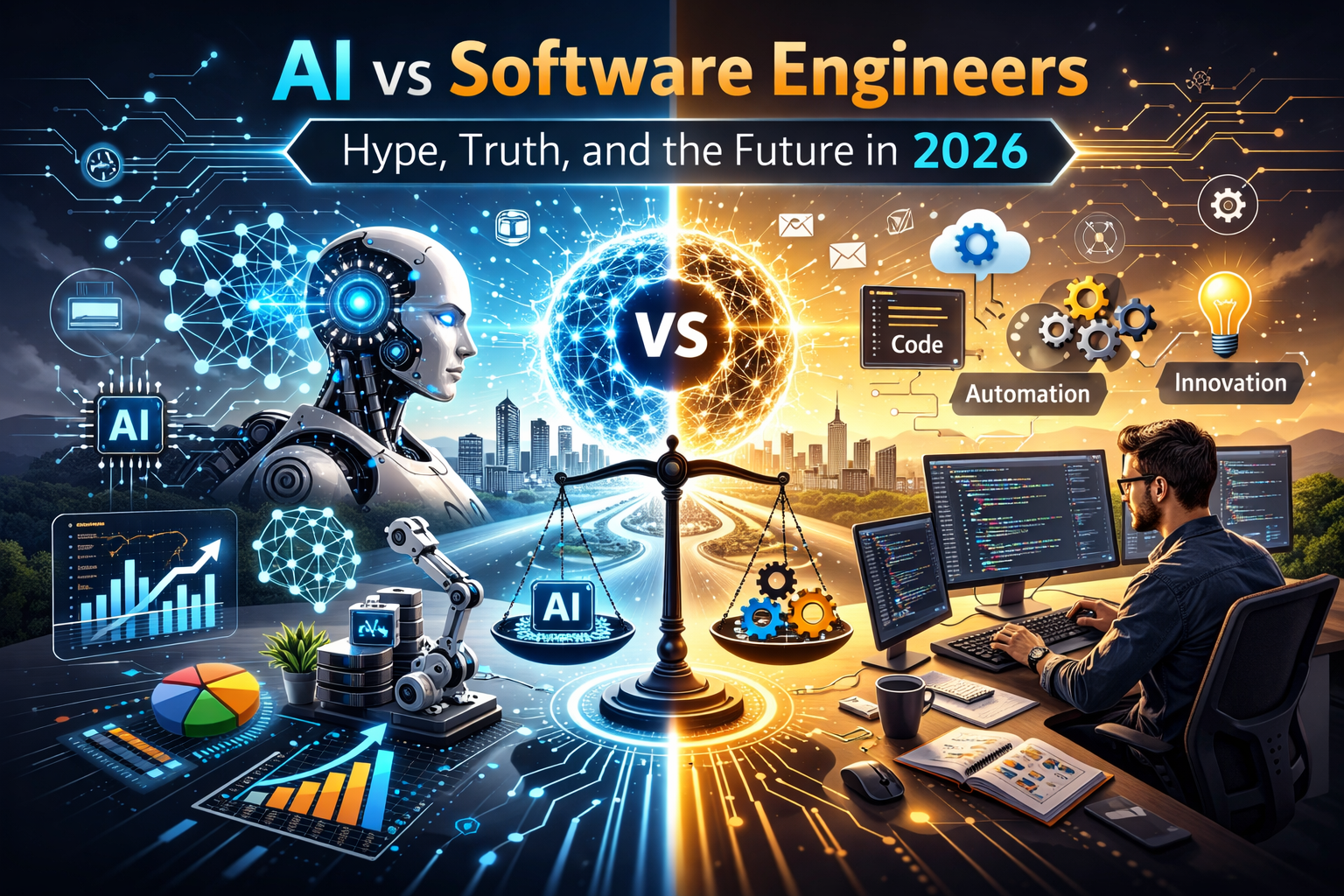
Will machine learning replace Software Engineers?
This is one of the most common concerns among aspiring developers.
Machine learning will not replace Software Engineers. Instead, it is creating new opportunities and increasing the demand for strong engineering skills.
Machine learning models need to be deployed, scaled, and maintained within software systems. Without Software Engineers, these models cannot function in real-world applications.
Even Machine Learning Engineers rely heavily on software engineering principles. The future is not about choosing one over the other—it is about understanding both.
Why you should join Everyone Who Codes?
Many learners struggle because they lack direction. They spend months learning random topics without a clear understanding of what is required to get hired.
Everyone Who Codes provides a structured approach that eliminates this confusion. We guide you step by step, from fundamentals to advanced concepts, ensuring that you build skills that are relevant to the industry.
We strongly encourage you to explore our free resources as well. These resources are designed to give you a clear starting point and help you understand what to focus on.
If you are serious about your career, start here: https://everyonewhocode.com
Get a free ATS-compliant resume in blogs
Your resume plays a critical role in your job search. Many candidates are rejected simply because their resumes are not optimized for ATS systems.
At Everyone Who Codes, you can get a free ATS-compliant resume that is designed to highlight your skills and projects effectively. This increases your chances of getting shortlisted and moving forward in the hiring process.
How to get a job in 90 days?
Getting a job in 90 days requires focus, consistency, and the right strategy.
You begin by building strong programming fundamentals and understanding core concepts. Then you move on to creating real-world projects that demonstrate your abilities. Finally, you prepare for interviews by practicing coding problems and improving your communication skills.
Our “Get a job in 90 days” roadmap is designed to guide you through this journey in a structured and efficient way.
Mock interview: What companies actually test
In a software engineering interview, companies focus on problem-solving and system design. You may be asked to design scalable systems or solve coding problems that test your understanding of algorithms.
In a machine learning interview, the focus shifts toward data and models. You may be asked how you would approach a real-world problem, select features, and evaluate model performance.
Both roles require strong fundamentals, but the emphasis differs based on the nature of the work.
Book a 1:1 session
If you are still unsure about your path, the best way to gain clarity is through personalized guidance.
Book a 1:1 session with Everyone Who Codes to understand your strengths, identify gaps, and create a roadmap tailored to your goals.
Start here: https://everyonewhocode.com
Want a Personalized Plan to land interviews and clear them to land job offers?
If you want a structured roadmap, real feedback, and mentorship from FAANG engineers, here is how we can help:
- Career Guidance Program (to get interview calls) – Resume review & job search tips – Everyone Who Codes
- 1:1 DSA / System Design / Interview Mentorship to clear interviews – 1 : 1 Tech Mentorship – Everyone Who Codes
- Real Mock Interviews with Expert FAANG Engineers – Mock Interviews – Everyone Who Codes
If you are serious about preparing DSA the right way, you should explore https://everyonewhocode.com
https://everyonewhocode.com/services/mastering-data-structures-algorithms/
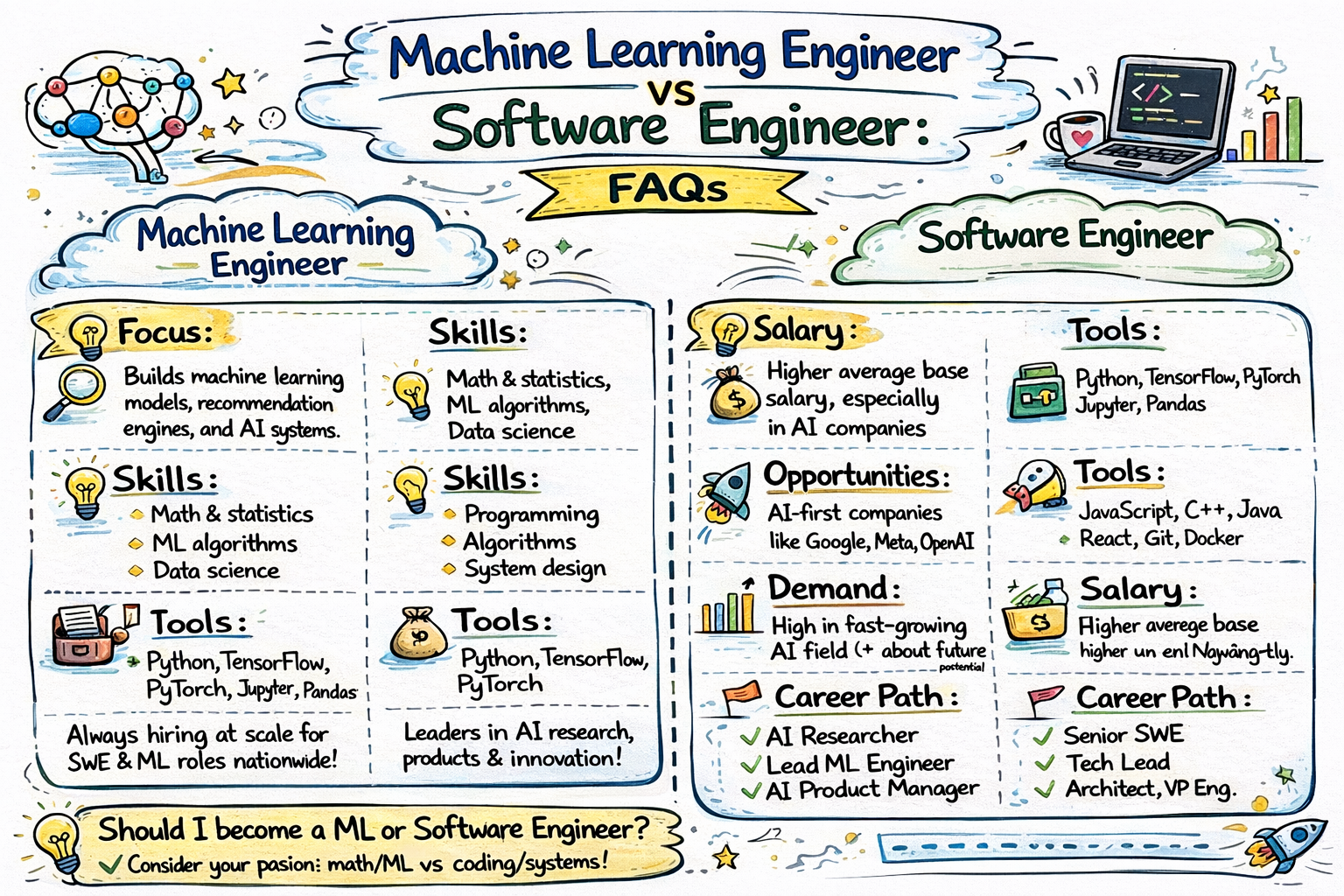
Machine Learning Engineer vs Software Engineer: FAQs
1. Which career is better in 2026: Machine Learning Engineer or Software Engineer?
There is no universally “better” option—it depends on your interests and strengths. If you enjoy structured problem-solving, system design, and building scalable applications, software engineering is a strong choice. If you are more interested in data, statistics, and building intelligent systems that learn from patterns, Machine Learning Engineering may suit you better. Both roles are highly relevant and in demand in 2026.
2. Can a Software Engineer transition into a Machine Learning Engineer role?
Yes, many Machine Learning Engineers start as Software Engineers. The transition typically involves learning mathematics (linear algebra, probability, statistics), machine learning concepts, and tools like Python, TensorFlow, or PyTorch. Strong software engineering fundamentals actually make this transition smoother, especially for deploying models in production.
3. Do Machine Learning Engineers earn more than Software Engineers?
In general, Machine Learning Engineers may earn slightly higher salaries due to the specialized skill set. However, experienced Software Engineers especially those with strong system design skills can earn equal or higher compensation. Salary depends more on skill level, company, and experience rather than just the role.
4. Is DSA important for Machine Learning Engineers?
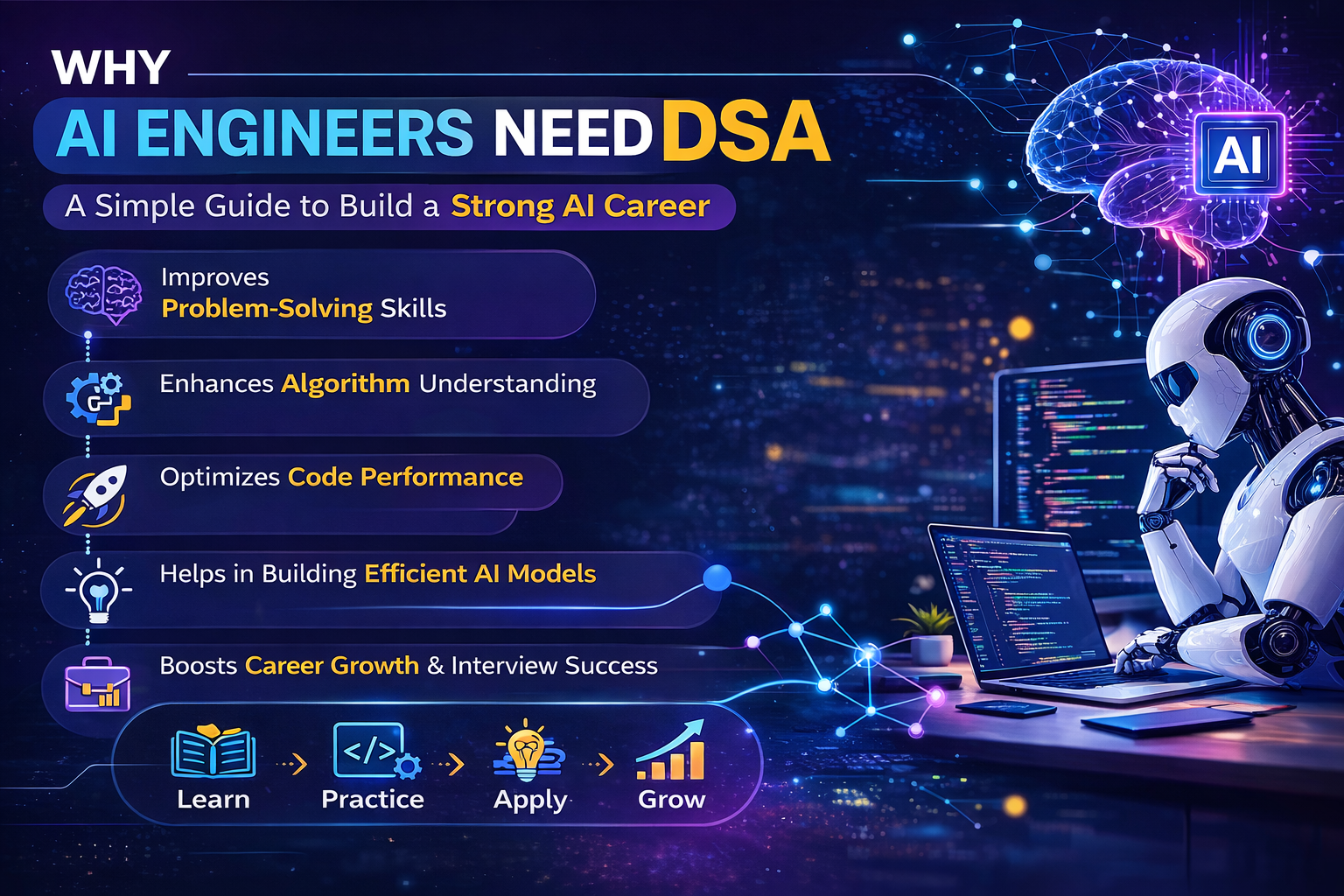
Yes, but not to the same extent as for Software Engineers. Data Structures and Algorithms (DSA) are crucial for clearing interviews, especially in top tech companies. While ML Engineers focus more on data and models, strong DSA knowledge is still expected during hiring processes.
5. What should beginners choose: Software Engineering or Machine Learning?
Beginners are generally advised to start with Software Engineering fundamentals. This includes programming, DSA, and system design. Once you build a strong foundation, transitioning into Machine Learning becomes much easier. Starting directly with ML without programming basics often leads to confusion.
6. Will AI replace Software Engineers in the future?
No, AI will not replace Software Engineers. Instead, it is transforming the role. Engineers are increasingly using AI tools to improve productivity, but core skills like system design, architecture, and problem-solving remain essential. In fact, AI is increasing the demand for skilled engineers.
7. What skills should I focus on to get hired faster in 2026?
To get hired quickly:
- For Software Engineering: focus on programming, DSA, system design, and real-world projects
- For Machine Learning: focus on Python, mathematics, data handling, model building, and deployment
In both cases, strong fundamentals, consistent practice, and interview preparation are key to landing job offers.
8. Want a personalized plan to land interviews and clear them to land job offers?
If you want a structured roadmap, real feedback, and mentorship from FAANG engineers, here is how we can help:
- Career Guidance Program (to get interview calls) – Resume review & job search tips – Everyone Who Codes
- 1:1 DSA / System Design / Interview Mentorship to clear interviews – 1 : 1 Tech Mentorship – Everyone Who Codes
- Real Mock Interviews with Expert FAANG Engineers – Mock Interviews – Everyone Who Codes
If you are serious about preparing DSA/ System design the right way, you should explore https://everyonewhocode.com/
https://everyonewhocode.com/services/mastering-data-structures-algorithms/