Skip to content
A calm, practical guide for software engineers
Cracking a full stack developer interview often feels harder than learning full stack development itself. Many candidates spend months learning frontend and backend technologies, building projects, and practicing coding problems, only to feel completely lost when they sit in an interview. This experience is more common than people admit, and it usually has nothing to do with intelligence or effort.
The real problem is that most people prepare for interviews in the wrong way. They focus on collecting information instead of learning how interviews actually work. A full stack developer interview is not designed to test how much you remember. It is designed to understand how you think, how you explain ideas, and how you handle uncertainty.
Once you understand this, interview preparation becomes calmer and more focused.
What a full stack developer interview Is really about?
A full stack developer interview is meant to simulate real engineering conversations. In real jobs, problems are rarely clear, requirements change, and collaboration matters more than perfect answers. Interviews reflect this reality.
Interviewers are watching how you approach problems, not just what solution you reach. They notice whether you ask questions, whether you explain assumptions, and whether you can connect frontend, backend, and data concepts without panic.
Many candidates believe they are being judged on perfection. In reality, they are being judged on clarity. Candidates who speak clearly, think out loud, and stay calm often perform better than candidates who know more but struggle to explain.

Why most candidates feel unprepared even after studying?
It is common to feel unprepared even after months of learning. This happens because studying and interviewing require different skills. Tutorials teach you how things work. Interviews ask you to explain why things work.
If you have only practiced coding silently or following instructions, interviews feel uncomfortable. Suddenly you must talk, reason, and justify decisions. This shift surprises many candidates.
Preparation should not only involve learning more content. It should involve practicing explanation, decision-making, and communication. When those skills are missing, even simple questions feel difficult.
The role of fundamentals in interview confidence
Fundamentals quietly decide most full stack interviews. Concepts like how the web works, how requests move between frontend and backend, and how data is handled appear again and again in different forms.
When fundamentals are strong, your brain stays calm. You can reason through unfamiliar questions because you understand the base concepts. When fundamentals are weak, everything feels confusing and stressful.
Revisiting basics before interviews is not a step backward. It is often the fastest way to improve confidence and performance.
How frontend questions are usually framed?
Frontend interview questions are rarely about making things look beautiful. They focus on behavior, structure, and data flow.
Interviewers want to understand how user actions affect the application. They may ask how you would handle a form submission, manage loading states, or update data on the screen. These questions test how you organize thoughts more than how well you design interfaces.
Candidates who slow down and explain their thinking usually perform better than those who rush to impress.
Backend discussions are about logic, not memorization
Backend interviews often feel intimidating, but they are usually logical conversations. Interviewers want to understand how you think about requests, responses, and data handling.
They may ask how an API behaves, how authentication works at a high level, or how errors should be handled. These are not trick questions. They are opportunities to explain flow and responsibility.
Candidates who focus on explaining how things work rather than listing technologies appear more confident and reliable.

Thinking about databases without overthinking
Database questions often sound technical, but they are mostly about reasoning. Interviewers want to know how you think about storing and retrieving information.
You may be asked how you would design data for a simple application. There is no perfect answer. What matters is how you explain relationships, assumptions, and trade-offs.
Calm explanation matters more than advanced database knowledge.
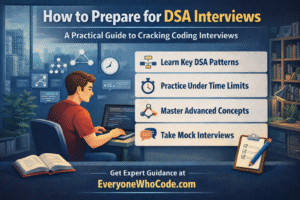
Coding interviews are about process, not speed
Coding rounds are a common part of full stack interviews, but they are widely misunderstood. Speed is not the goal. Clarity is.
Interviewers want to hear how you understand the problem, how you break it down, and how you approach a solution. Thinking out loud helps them follow you and support you.
Even when you get stuck, explaining what you are trying to do shows problem-solving ability. Silence often works against you.
Why projects matter more than you think?
Projects often become the center of interview conversations. Interviewers use them to understand how you work in real situations.
They ask why you built something, how you structured it, and what challenges you faced. These questions are not meant to criticize. They are meant to understand how you think.
Practicing how you explain your projects can dramatically improve interview performance.
Understanding interview anxiety
Interview anxiety is rarely about lack of skill. It comes from uncertainty. When you do not know what to expect or how you will respond, fear grows.
The goal of preparation is not to eliminate anxiety completely, but to reduce uncertainty. Familiarity creates calm. Practice creates confidence.
Once interviews feel familiar, they stop feeling threatening.
A gentle reminder before moving forward
If you feel nervous about full stack interviews, that does not mean you are not ready. It often means you care about doing well.
Clarity, explanation practice, and calm preparation change everything.
🎯 Free interview preparation resource
If this guide feels relatable, it usually means one thing:
you don’t need more tutorials, you need structured interview practice.
Everyone Who Codes helps full stack developers:
- Practice real interview conversations
- Improve frontend, backend, and system explanations
- Review projects from an interviewer’s perspective
- Build confidence through mock interviews
Download the full stack interview preparation guide by Everyone Who Codes
It helps you prepare calmly, clearly, and confidently.
https://Everyone Who Codes.com/blogs/
How you perform in the interview matters?
Once preparation is done, the interview itself becomes a different challenge. Many candidates assume that if they studied well, performance will take care of itself. In reality, performance is a separate skill. Knowing something and demonstrating it under pressure are not the same thing.
Interviews create artificial pressure. There is a time limit, someone is watching, and your future feels attached to every answer. This pressure changes how people think and speak. Even confident developers can struggle if they have not practiced performing under these conditions.
The goal during an interview is not to impress. The goal is to communicate clearly while thinking in real time. Candidates who accept this perform more naturally and make fewer mistakes.

Communication is the hidden skill behind strong interviews
Interviewers make decisions based on how well they understand you. Clear communication builds trust quickly. Confusing or incomplete explanations create doubt, even when the technical idea is correct.
You do not need perfect language or advanced vocabulary. You need simple, direct explanations. Saying what you are thinking, why you are choosing an approach, and what assumptions you are making helps the interviewer stay aligned with you.
When interviewers understand you, they often guide you instead of testing you aggressively. Interviews feel easier when communication is clear.
Asking questions is a sign of strength!
Many candidates hesitate to ask questions because they fear looking unprepared. In reality, thoughtful questions show maturity and real-world thinking.
Clarifying requirements, confirming assumptions, and asking about constraints are all positive behaviors. They show that you are not guessing blindly. They also help you avoid building the wrong solution.
Interviews are not puzzles with hidden rules. They are discussions. Asking questions early often prevents confusion later.
Handling moments when you don’t know the answer
Every candidate faces moments of uncertainty. What matters is how you respond.
Freezing, apologizing repeatedly, or going silent increases pressure. Calmly explaining what you know, what you are unsure about, and how you would approach the problem shows confidence and honesty.
Interviewers do not expect encyclopedic knowledge. They expect problem-solving ability and adaptability. Being comfortable with uncertainty is one of the strongest signals you can send.
Staying calm when you make a mistake
Mistakes happen in interviews. Everyone makes them. What separates strong candidates from weak ones is how they recover.
If you realize something is wrong, say so. Explain what you noticed and how you would correct it. This shows self-awareness and responsibility.
Trying to hide mistakes or defend incorrect logic creates tension. Correcting yourself calmly builds trust.
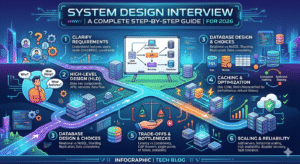
System discussions are about structure, not complexity
System-related questions often scare candidates because they imagine complex architectures. In reality, interviewers usually want to see structured thinking, not perfect designs.
Starting with a simple solution and gradually adding detail is usually the best approach. Explain components, data flow, and trade-offs in plain language. If something has limitations, acknowledge them openly.
Interviewers prefer honest, structured answers over overly complex designs that are hard to explain.

Behavioral questions are opportunities to show maturity
Behavioral questions are often underestimated. Candidates either overprepare scripted answers or dismiss these questions as unimportant. Both approaches are mistakes.
Behavioral questions help interviewers understand how you work with others, handle conflict, and grow from challenges. Honest reflection matters more than perfect stories.
Sharing real experiences, lessons learned, and how you improved shows self-awareness and professionalism. Interviewers remember authenticity.
Why mock interviews change everything
Mock interviews are one of the most effective ways to improve interview performance. They reduce fear by making interviews familiar.
Practicing under realistic conditions helps you identify weak points early. It improves pacing, explanation, and confidence. Feedback helps you correct patterns you may not notice on your own.
Candidates who practice mock interviews consistently improve faster than those who study alone.
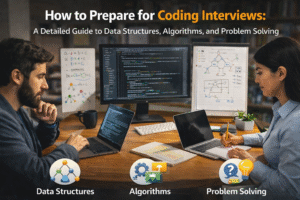
Coding interviews are not about knowing everything. They are about thinking clearly, learning continuously, and demonstrating your ability to solve problems effectively. With the right preparation, coding interviews become an opportunity to showcase your skills rather than a source of stress.
This is why we run real FAANG-style mock interviews with senior engineers, not generic practice, but real pressure simulations with direct feedback.
Links:
🔗 1:1 Mock Interviews – DSA/ System Design / Behavioural Interview – Mock Interviews – Everyone Who Codes
The mindset shift that turns interviews into conversations
Candidates who crack full stack interviews stop treating interviews as battles. They treat them as conversations.
They focus on collaboration instead of competition. They explain their thinking instead of rushing. They listen as much as they speak.
This mindset shift changes how interviewers perceive you. When interviews feel collaborative, decisions become easier.

Turning interviews into offers
Cracking interviews is not just about passing rounds. It is about building enough trust that interviewers feel comfortable working with you.
Clarity, calmness, honesty, and communication all contribute to that trust. When interviewers feel confident in how you think and communicate, offers follow naturally.
Preparation plus the right mindset creates momentum.
How Everyone Who Codes helps you convert interviews into offers?
Many candidates prepare alone and never receive clear feedback. They repeat the same mistakes without realizing it.
Everyone Who Codes helps full stack developers:
- Practice real interview conversations
- Improve explanations for frontend, backend, and system topics
- Prepare for coding, behavioral, and system discussions
- Build calm, confident interview presence through mock interviews
Support focuses on thinking and communication, not memorized answers.
A final reminder before you walk into your next interview!
You do not need to be perfect to succeed in a full stack developer interview. You need to be clear, calm, and prepared to explain your thinking.
Interviews reward understanding, not speed. They reward communication, not memorization.
Confidence grows when preparation meets practice.
Interview readiness resource
If interviews still feel unpredictable or stressful, structured practice can change everything.
👉 Book a 1:1 full stack interview preparation session with Everyone Who Codes
Designed to help you practice realistically, get feedback, and walk into interviews with confidence to land job offers in under 90 days
Link here:
🔗 Career Guidance Program – Land Interviews – Resume review & job search tips – Everyone Who Codes
🔗 1:1 DSA/ System Design/ Behavioural Interview Mentorship – 1 : 1 Tech Mentorship – Everyone Who Codes
🔗 1:1 Mock Interviews – DSA/ System Design / Behavioral Interview – Mock Interviews – Everyone Who Codes

Frequently Asked Questions About Cracking a Full Stack Developer Interview
Do I need to know everything to crack a full stack developer interview?
No, you do not need to know everything. Full stack interviews are not about covering every tool or framework. Interviewers want to understand how you think, how you approach problems, and how clearly you explain your ideas. Even experienced developers do not know everything. What matters more is your ability to reason through problems, ask questions, and explain decisions calmly.
I feel nervous during interviews even when I know the answers. Is this normal?
Yes, this is completely normal. Interview pressure affects almost everyone, especially when the outcome feels important. Nervousness does not mean you are unprepared or not good enough. It usually means you care about doing well. The goal of preparation is not to remove nervousness completely, but to reduce uncertainty so you can stay calm and focused during the conversation.
How important are projects in a full stack developer interview?
Projects are extremely important because they show how you work in real situations. Interviewers often use projects to understand how you connect frontend, backend, and data concepts. They are less interested in how complex the project is and more interested in how well you understand it. Being able to explain why you built something and what you learned from it matters a lot.
What if I forget something I studied during the interview?
Forgetting things during an interview is common and does not automatically mean failure. Interviews are stressful environments, and memory gaps happen. What matters is how you handle the situation. Calmly explaining what you remember, what you are unsure about, and how you would find the answer shows problem-solving ability and honesty, which interviewers value.
Are coding rounds the most important part of the interview?
Coding rounds are important, but they are not the only deciding factor. Interviewers also pay close attention to how you communicate, how you explain your approach, and how you react when something goes wrong. Many candidates pass coding rounds but fail overall because they struggle with explanations or system discussions. A balanced approach matters more than coding alone.
How should I answer system or design questions if I am a junior developer?
You are not expected to design complex systems as a junior developer. Interviewers want to see structured thinking, not perfect architecture. Starting with a simple solution, explaining how components interact, and openly discussing limitations is usually enough. Being honest about what you know and how you think is more important than advanced technical depth.
Is it okay to ask questions during the interview?
Yes, asking questions is encouraged. Interviews are conversations, not tests. Asking thoughtful questions helps clarify requirements and shows that you are thinking carefully. Many strong candidates ask questions early to avoid misunderstandings. Interviewers often see this as a positive signal rather than a weakness.
How many interviews does it usually take before cracking one?
There is no fixed number. Some candidates succeed in their first few interviews, while others take several attempts. Each interview provides experience, even if it does not result in an offer. The key is learning from each interview, identifying patterns, and improving communication and confidence over time.
Can mock interviews really make a difference?
Yes, mock interviews make a significant difference. They help you practice speaking under pressure, organizing thoughts, and handling unexpected questions. Mock interviews also provide feedback that you may not get elsewhere. Many candidates see noticeable improvement after just a few realistic mock sessions.
Links to practice with FAANG Engineers:
🔗 1:1 Mock Interviews – DSA/ System Design / Behavioural Interview – Mock Interviews – Everyone Who Codes
How does Everyone Who Codes help with full stack interview preparation?
Everyone Who Codes focuses on clarity, communication, and confidence rather than memorized answers. Support includes practicing real interview conversations, reviewing projects from an interviewer’s perspective, improving explanations for frontend, backend, and system topics, and conducting mock interviews. This structured approach helps candidates feel prepared and calm during actual interviews.
Everyone Who Codes helps learners bring structure and clarity to the learning process. Instead of guessing what to learn next, learners receive guidance, feedback on projects, help with explaining concepts, and interview preparation support. This reduces confusion and helps learners move forward with confidence and land job offers in 90 days.
If you are tired of random prep and want a structured plan tailored to your experience, we offer 1:1 career mapping, DSA mentorship, and FAANG-style mock interviews at Everyone Who Codes to land job offers in under 90 days
Link here:
🔗 Career Guidance Program – Land Interviews – Resume review & job search tips – Everyone Who Codes
🔗 1:1 DSA/ System Design/ Behavioural Interview Mentorship – 1 : 1 Tech Mentorship – Everyone Who Codes
🔗 1:1 Mock Interviews – DSA/ System Design / Behavioral Interview – Mock Interviews – Everyone Who Codes