Skip to content
Artificial intelligence has moved from being a futuristic concept to something developers use every single day. Whether it’s generating code, debugging errors, or building prototypes, AI tools are reshaping how software is created. Naturally, this has sparked one of the most talked-about debates in tech today: AI vs Software Engineers.
Many people are asking whether learning to code still makes sense. Others are worried that AI will take over developer jobs entirely. At the same time, companies are rapidly adopting AI to speed up development.
So, what’s really happening here?
The answer isn’t as extreme as the internet makes it sound. AI is not replacing software engineers, but it is definitely changing the nature of their work. To understand this properly, we need to separate hype from reality and look at what both AI engineers and software engineers actually do.
If you are tired of random preparation and want a structured plan tailored to your experience, there are platforms like Everyone Who Codes that focus on helping developers land roles faster. They offer personalized career mapping, DSA mentorship, and FAANG-style mock interviews designed to help you secure job offers in under 90 days.
Link here:
🔗 Career Guidance Program – Land Interviews – Resume review & job search tips – Everyone Who Codes
🔗 1:1 DSA/System Design/Behavioral Interview Mentorship – 1 : 1 Tech Mentorship – Everyone Who Codes
🔗 1:1 Mock Interviews – DSA/System Design/Behavioral Interview – Mock Interviews – Everyone Who Codes
Understanding the AI hype in software engineering
The rise of tools like ChatGPT and GitHub Copilot has made it feel like anyone can write code instantly. You type a prompt, and within seconds, you get a working solution. This creates the illusion that coding itself is becoming less valuable.
This is where the hype begins.
People often confuse code generation with software engineering. Writing code is only one part of the job. Real-world software development involves understanding user needs, designing scalable systems, handling edge cases, ensuring security, and maintaining applications over time.
AI is excellent at generating patterns, but it does not truly understand the deeper reasoning behind systems. It cannot take ownership of long-term architecture decisions or business impact.
This is why the “AI will replace developers” narrative is oversimplified.
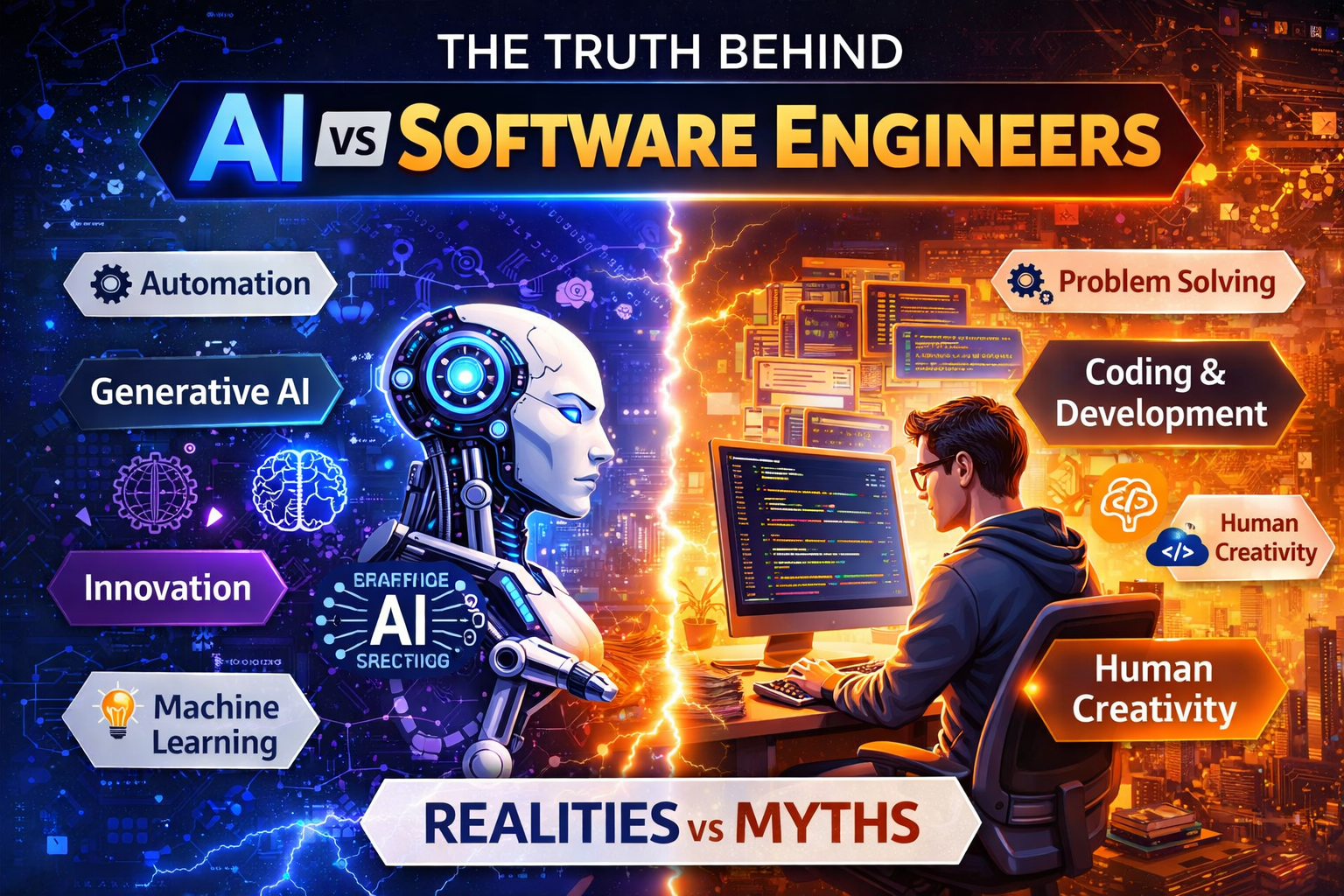
The truth behind AI vs Software Engineers
When we look at how AI is actually used today, the picture becomes clearer. Developers are using AI tools widely, but not as replacements. Instead, they act as productivity boosters that assist in coding, debugging, and learning.
AI helps speed up execution, but the thinking still comes from engineers.
Software engineering involves trade-offs, decision-making, and understanding real-world constraints. These are not just technical problems—they are human problems. And that is where developers continue to play a critical role.
So instead of replacement, what we are seeing is augmentation.
What AI engineers actually do
AI engineers focus on building systems that can learn from data and make decisions. Their work revolves around machine learning models, data pipelines, and intelligent systems.
They start by identifying problems that can be solved using data, such as recommendation systems or predictive analytics. From there, they design and train models, test their performance, and refine them continuously.
A key part of their role is ensuring that these models are reliable and unbiased. They also need to integrate these systems into real applications, making sure they scale effectively and perform well in production environments.
This role requires a strong foundation in mathematics, statistics, and programming. More importantly, it requires a mindset of continuous learning, because AI evolves rapidly.
What software engineers actually do
Software engineers are responsible for building complete systems that users interact with. Their work starts from understanding requirements and continues through design, development, deployment, and maintenance.
They create the architecture of applications, ensuring that systems are scalable, secure, and efficient. They write code, test it, debug issues, and continuously improve the product over time.
Unlike AI engineers, their work is more deterministic. They aim to build systems that behave predictably and reliably under different conditions.
In essence, software engineers are responsible for turning ideas into real, functioning products.
AI Engineers vs Software Engineers: understanding the difference
Although both roles involve coding, their focus areas are very different. AI engineers work on intelligence and data-driven systems, while software engineers focus on building structured applications.
AI systems are probabilistic, meaning their outputs can vary. Software systems are deterministic, meaning they are expected to behave consistently.
However, these roles are not in competition. In modern applications, both are essential. AI needs software infrastructure to function, and software increasingly benefits from AI capabilities.
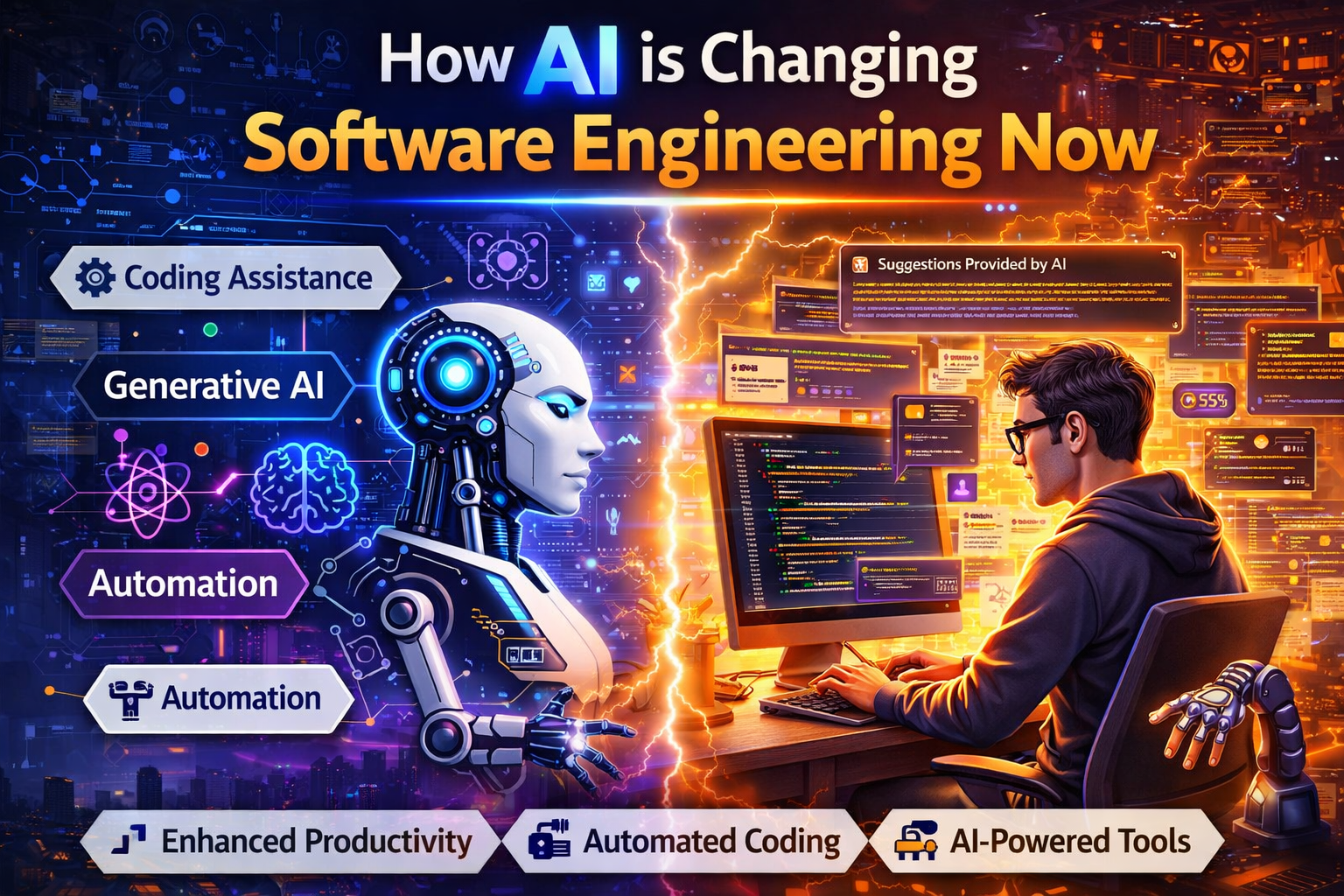
How AI is changing software engineering
AI is not replacing developers, but it is changing how development happens.
Developers are moving away from writing every line of code and towards designing systems and reviewing AI-generated outputs. This shift allows them to focus more on problem-solving and less on repetitive tasks.
Development cycles are becoming faster. Tasks that once took hours can now be completed in minutes. This increase in productivity is one of the biggest advantages of AI.
But with this comes responsibility. Engineers must ensure that AI-generated code is correct, secure, and aligned with business needs.
In the middle of this shift, having the right guidance can make a huge difference. Many developers struggle not because of lack of effort, but because of lack of direction.
🔗 Career Guidance Program – Land Interviews – Resume review & job search tips – Everyone Who Codes
🔗 1:1 DSA/System Design/Behavioral Interview Mentorship to land job offers – 1 : 1 Tech Mentorship – Everyone Who Codes
Will AI replace software engineers?
The concern around job loss is understandable. AI is automating certain tasks, and this naturally creates uncertainty.
However, what AI replaces are mostly repetitive and low-level tasks. The core responsibilities of engineers designing systems, solving problems, and making decisions remain unchanged.
AI does not understand business context. It does not take ownership. It does not collaborate with teams or think creatively.
This means software engineers are still essential.
What will change is the expectation. Engineers will need to be more efficient, more adaptable, and more skilled in using AI tools.
The real concern: job loss or job evolution?
Rather than eliminating jobs, AI is reshaping them.
Some entry-level roles may become more competitive because AI reduces the need for basic coding tasks. At the same time, new roles are emerging around AI integration, system design, and product thinking.
The demand is shifting toward engineers who can think beyond code.
This is where structured preparation becomes important. Random learning is no longer enough. Developers need a clear roadmap to stay relevant and competitive.
Get a free ATS-compliant resume and land a job faster
Before even reaching technical interviews, one critical step is often overlooked: your resume.
Most companies use Applicant Tracking Systems (ATS) to filter candidates. If your resume is not optimized, it may never even reach a recruiter.
An ATS-compliant resume significantly increases your chances of getting interview calls.
At Everyone Who Codes, you can get guidance on building a free ATS-compliant resume aligned with current hiring standards. This ensures that your preparation actually converts into real opportunities.
To understand more about their mission and approach, you can visit:
https://everyonewhocode.com/about-us/
A strong resume is the first step toward landing interviews and ultimately securing a job.
What skills developers need in 2026 and beyond
The future belongs to developers who can combine strong fundamentals with modern tools.
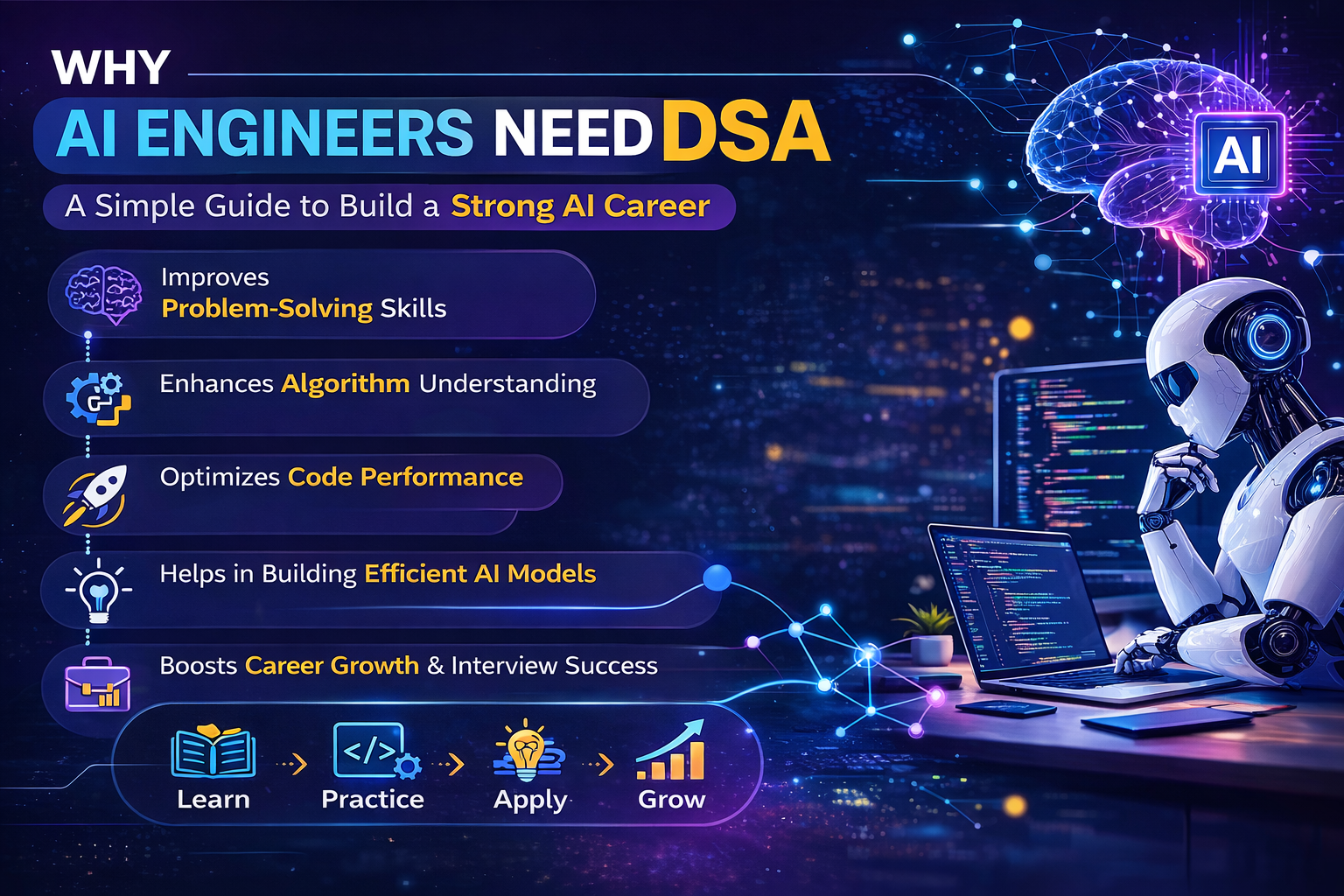
Understanding data structures, algorithms, and system design is still essential. These fundamentals form the backbone of problem-solving.
At the same time, developers need to become comfortable using AI tools. Not as a replacement, but as an extension of their capabilities.
Equally important is the ability to communicate, collaborate, and think critically. As systems become more complex, these skills become even more valuable.
Final verdict: AI vs Software Engineers
The debate around AI vs Software Engineers is often framed as a competition, but that is not the reality.
AI is a tool. Software engineers are decision-makers.
AI improves speed. Engineers ensure correctness.
AI generates. Engineers design.
The future is not about one replacing the other. It is about how effectively they work together.
Conclusion
The tech industry is not moving toward a world without developers. It is moving toward a world where developers are more powerful than ever.
AI will continue to evolve, but so will software engineering. The engineers who succeed will be those who adapt, learn continuously, and use AI to their advantage.
Want a personalized plan to land interviews and clear them to land job offers?
If you want a structured roadmap, real feedback, and mentorship from FAANG engineers, here is how we can help:
Career Guidance Program (to get interview calls) – Resume review & job search tips – Everyone Who Code
1:1 DSA / System Design / Interview Mentorship to clear interviews – 1 : 1 Tech Mentorship – Everyone Who Code
Real Mock Interviews with Expert FAANG Engineers – Mock Interviews – Everyone Who Codes
Whether you are starting out or trying to level up, the right guidance can help you land job offers in under 90 days.
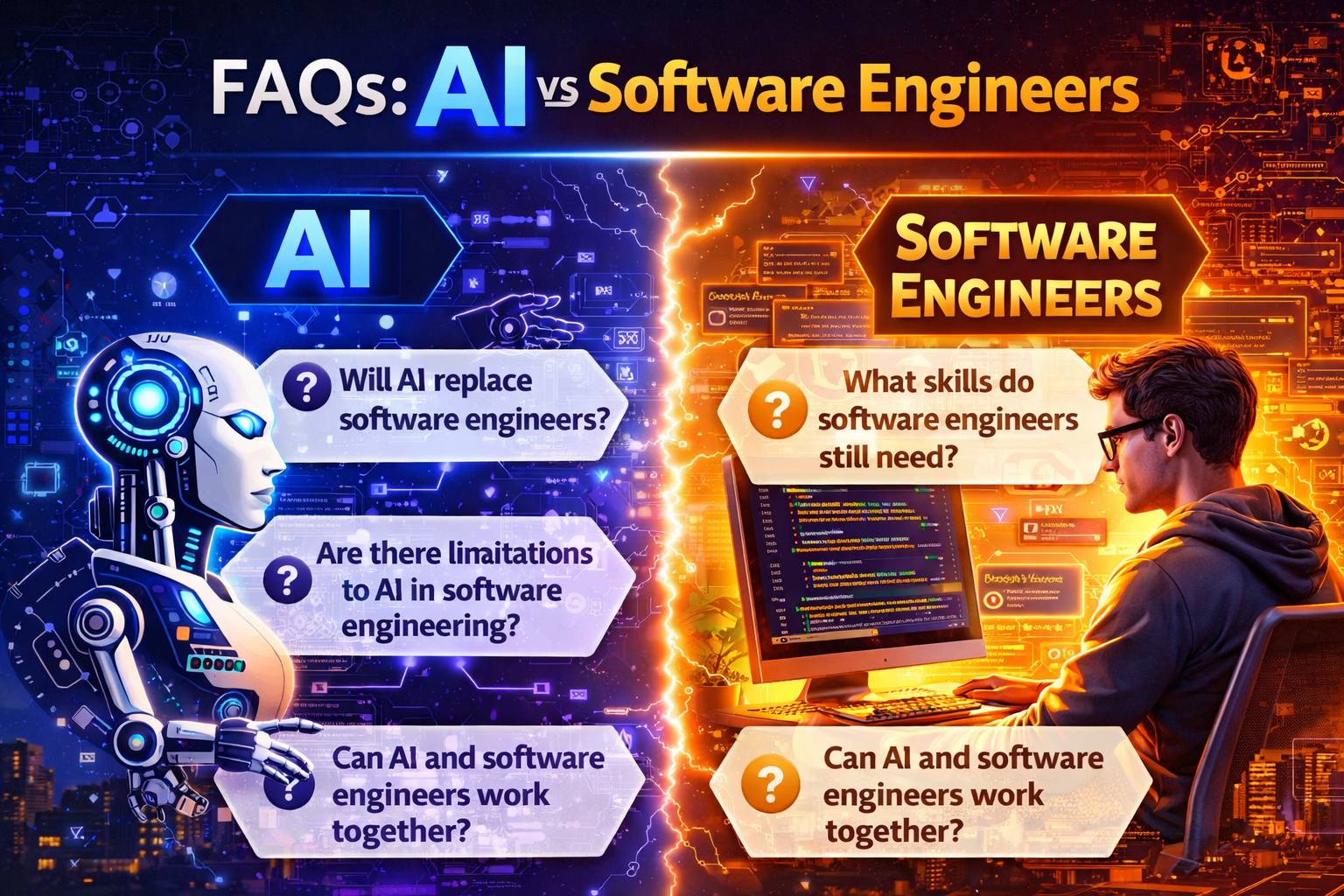
FAQs: AI vs Software Engineers
Will AI replace software engineers in 2026?
No, AI will not completely replace software engineers. While AI can automate repetitive coding tasks and improve productivity, it cannot replace human decision-making, system design, and problem-solving. Engineers are still essential for building and managing complex systems.
What is the difference between AI engineers and software engineers?
AI engineers focus on building intelligent systems using data and machine learning models, while software engineers design and develop complete applications and systems. AI engineers work with probabilistic outputs, whereas software engineers build deterministic and reliable systems.
Is coding still worth learning in the AI era?
Yes, coding is still highly valuable. Even with AI tools, understanding programming fundamentals is essential to build, debug, and scale applications. AI enhances coding but does not eliminate the need for developers.
How is AI changing software engineering jobs?
AI is transforming software engineering by automating repetitive tasks and speeding up development. Developers are now focusing more on system design, problem-solving, and reviewing AI-generated code instead of writing everything manually.
What skills are required to stay relevant as a developer in 2026?
Developers need strong fundamentals like data structures, algorithms, and system design, along with the ability to use AI tools effectively. Problem-solving, communication, and adaptability are also critical skills for the future.
Can beginners still get software engineering jobs with AI tools available?
Yes, beginners can still get jobs, but competition is increasing. Having a strong resume, structured preparation, and practical skills is important. Using AI tools effectively can actually give beginners an advantage.
How can I get a software engineering job faster in the AI era?
To get a job faster, focus on structured preparation, build a strong ATS-compliant resume, and practice real interview scenarios. Platforms like Everyone Who Codes provide mentorship, career guidance, and mock interviews to help candidates land offers in a shorter time.
Want a personalized plan to land interviews and clear them to land job offers?
If you want a structured roadmap, real feedback, and mentorship from FAANG engineers, here is how we can help:
- Career Guidance Program (to get interview calls) – Resume review & job search tips – Everyone Who Codes
• 1:1 DSA / System Design / Interview Mentorship to clear interviews – 1 : 1 Tech Mentorship – Everyone Who Codes - Real Mock Interviews with Expert FAANG Engineers – Mock Interviews – Everyone Who Codes
If you are serious about preparing DSA/ System design the right way, you should explore https://everyonewhocode.com/
https://everyonewhocode.com/services/mastering-data-structures-algorithms/